They came from the classrooms of City College of Angeles. They stepped into an international gathering of leaders. And through teamwork, initiative, and service, they became part of the story behind the successful hosting of the 2026 JCI World Congress.
When the world gathered in Clark for the 2026 JCI World Congress, hundreds of people worked behind the scenes to ensure that delegates, guests, and participants experienced a welcoming and well-organized event. Among them was a remarkable group of young people from City College of Angeles — approximately 250 to 280 fourth-year students taking up Bachelor of Science in Tourism.
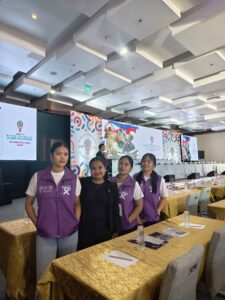
For these students, the Congress was more than an opportunity to volunteer. It was a chance to take what they had learned in the classroom and put it into practice in an international environment, where preparation, adaptability, communication, and teamwork mattered every day.
At the center of this student volunteer group was its Student Head, who helped lead the experience and became one of the students directly involved in the event’s operations.
An Opportunity to Be Part of Something Bigger
The participation of City College of Angeles began through an invitation from JCI Angeles Culiat, which personally approached the college and encouraged its students to become part of the World Congress volunteer team.
The opportunity brought together hundreds of fourth-year Tourism students, giving them the chance to experience the demands of an international event while contributing to an occasion that placed Clark and the Philippines before the global JCI community.
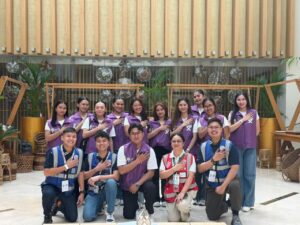
With approximately 250 to 280 students involved, the group became a significant part of the volunteer workforce. Their participation demonstrated how local educational institutions and civic organizations can work together to give young people meaningful opportunities to serve and gain practical experience.
A Team Across Different Areas of Operations
The students were assigned to different committees and operational areas depending on their interests, chosen roles, and availability.
Their responsibilities covered a wide range of functions, including accommodation, help desk, Critical Response Committee (CRC), programmes, sponsorship, concessionaire operations, trade expo, merchandise booth, and bus stop assignments.
They also took part in registration, delegate assistance, ushering, transportation support, and information services. Rather than being assigned to one uniform role, volunteers were distributed across different teams, allowing them to contribute where they were most needed and where their availability permitted.
For the Student Head, this meant being part of an environment where communication and coordination were essential. Every assignment had its own responsibilities, and every volunteer played a part in ensuring that the larger operation continued to move forward.
It was an opportunity to understand that a successful international event does not depend on one committee or one group of organizers. It requires different teams working together, each fulfilling its responsibilities while remaining connected to a common objective.
Learning From the People Who Came From Around the World
One of the most valuable aspects of the experience was the opportunity to interact directly with international delegates and JCI leaders.
As part of the Meetings and Conference team under the JCI Secretariat, the Student Head had opportunities to assist delegates and candidates and experience the Congress from a closer operational perspective.
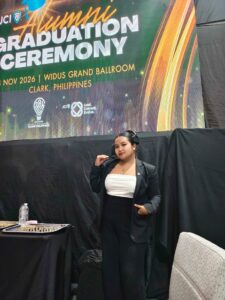
One particularly memorable encounter was with 2026 JCI World President Alejandra Castillo during the Alumni Graduation. The Student Head was assigned to hand her a pin, creating an opportunity for a brief but meaningful exchange.
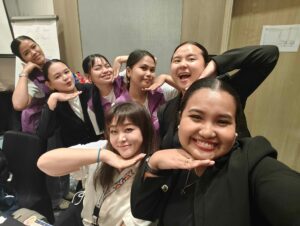
During their interaction, Alejandra complimented the student for being thoughtful and considering the comfort of others rather than simply choosing what would be most comfortable personally.
For the student, the encounter was a reminder that professionalism is not always demonstrated through grand gestures. Sometimes, it is reflected in small decisions — anticipating another person’s needs, being attentive, and making others feel welcome.
Experiences like this gave the volunteers something that could not easily be replicated in a classroom: the opportunity to communicate with people from different cultures, observe international leadership firsthand, and understand the importance of making every guest feel valued.
The Lessons Behind the Long Hours
For the volunteers, however, the most meaningful lessons were not limited to their interactions with delegates.
Mhixie Ricacho, one of the student volunteers, reflected on the experience and emphasized that every successful event is made possible by teamwork, patience, dedication, and people working together toward one goal.
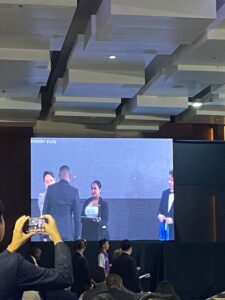
She recalled that some of the most meaningful moments came from the challenges behind the scenes — the long hours, unexpected situations, pressure, and sacrifices that volunteers overcame together.
Her most memorable experience was meeting and assisting delegates from different places and cultures. Knowing that, in their own small ways, the students had become part of an international gathering that brought people together gave the experience a deeper meaning.
Beyond the memories, she gained connections, learned to work with different people, and discovered the value of interacting with individuals from other nationalities without being afraid of unfamiliar situations.
As she reflected:
“At the end of the day, I may not remember every task I accomplished, but I will always remember the people I worked with, the lessons I learned, and the feeling of being part of something bigger than myself.”
Her words capture an experience shared by many volunteers: the realization that service is not always about the individual tasks completed, but about the collective effort and the people who make the journey worthwhile.
A Classroom Experience That Became a Global Opportunity
For fourth-year Tourism students, participating in the JCI World Congress offered a valuable opportunity to experience the industry in a demanding, real-world setting.
They were able to observe how different operational teams functioned, how delegates from various countries were assisted, and how multiple responsibilities came together to support an international event.

But beyond the practical experience, the Congress also gave them an opportunity to develop confidence, adaptability, and a greater appreciation for teamwork.
For the Student Head, it was an experience that brought together leadership and service. Being part of the Meetings and Conference team, interacting with international delegates, and helping represent the student volunteers provided a firsthand understanding of the responsibilities that come with working in an international environment.
For the entire group, it was a reminder that opportunities to lead and make a difference do not always begin with formal positions. They can begin with accepting an assignment, helping a teammate, responding to an unexpected challenge, or simply choosing to serve.
The Young People Behind the Welcome
The 2026 JCI World Congress may have brought together leaders from across the globe, but its success also depended on the dedication of people working quietly behind the scenes.
Among them were 250 to 280 students from City College of Angeles who stepped beyond their classrooms and became part of an international experience.
They served in different committees, assisted delegates, supported operations, and helped create the welcoming environment that visitors experienced throughout the Congress.
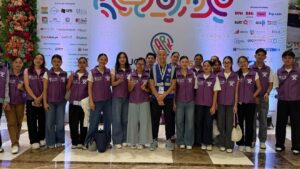
They may have arrived as students looking for an opportunity to gain experience. They left with lessons in teamwork, friendships, professional exposure, and memories of having contributed to something much larger than themselves.
For City College of Angeles, their participation was an opportunity to see its students put their knowledge into action. For the host community, it was a demonstration of the young talent ready to contribute to its future. And for the students themselves, it was a reminder that they do not have to wait until graduation to become part of something meaningful.
They were students by profession, volunteers by choice, and ambassadors of their community by experience. When the world came to Clark, they helped make it feel welcome.
SEO by SEO-Hacker. Optimized and maintained by Sigil
© 2026 Asian Pearl. JCI Manila Official Publication. All Rights Reserved.