Two Years of Leadership, Service, and Excellence
From building opportunities for communities to strengthening the people and systems behind JCI Manila, Roberto Ben “Bobbit” Castro has shown that the true measure of leadership is not simply what gets accomplished, but what continues to grow because of it.
Some leaders are remembered for the projects they complete. Others are remembered for the people they empower, the systems they establish, and the opportunities they create for others to lead.

For Secretary General Roberto Ben “Bobbit” Castro, his journey through JCI Manila reflects all three.
From a relatively new member entrusted with Community Development in 2025 to the Secretary General helping strengthen the organization in 2026, SG Bobbit has built a reputation for turning responsibilities into opportunities for improvement. His rise through the chapter has been remarkably fast, but perhaps more remarkable is the consistency of his leadership: a combination of preparation, discipline, accountability, and heart.
Some might call it ambition. Others might call it preparation.

Those who have worked alongside him might simply call it the Midas Touch.
A Fast Rise, Built on Early Conviction
SG Bobbit’s JCI Manila journey began as a Baby Jaycee in December 2022. By January 2023, his first project had already been presented and approved. The project was turned over in April, its closing report completed in May, and by June 2023, he had been inducted as a regular member.
Barely a year and a half later, he was already campaigning for a seat on the Board of Directors.

It was a rapid ascent, but one built on an early willingness to take responsibility and get involved.
When he assumed office as 2025 Director for Community Development, he brought with him a clear conviction: community development should be more than a series of activities or short-term interventions. It should create meaningful opportunities for people to improve their circumstances, develop their capabilities, and build a better future.
His battle cry was simple.
PUSO.
Heart.

It became more than a slogan. It became the organizing philosophy behind his directorate: how he approached communities, recruited commissioners and chairmen, developed partnerships, and encouraged members to experience the purpose of service.
But SG Bobbit’s version of leadership with heart was never meant to be heart without structure. From the beginning, he understood that meaningful impact required careful planning, disciplined execution, and people who were empowered to take ownership.
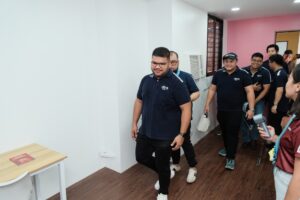
Turning Community Development Into a System
One of SG Bobbit’s defining contributions in 2025 was the development of the Community Development Playbook. He did not simply want to implement projects; he wanted to build a directorate capable of planning, executing, documenting, and presenting its work at a high standard.
His commitment to this approach was reflected in an achievement that would become a defining part of his year: he personally handled seven project bids in 2025.
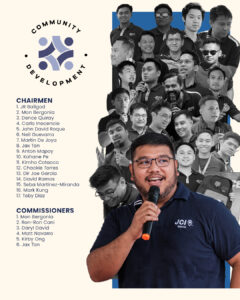
Rather than waiting until projects were completed before considering how their impact could be documented, SG Bobbit and his team worked backward from the stories they wanted Community Development to tell. Seven potential bids were conceptualized early, and programs and projects were deliberately developed around those narratives.
The team considered national bid requirements, consulted former directors and project leaders, and worked to connect the directorate’s priorities, beneficiaries, partnerships, timelines, funding requirements, communication strategies, and success indicators.
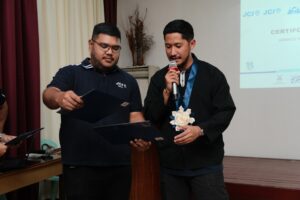
The calendar was equally deliberate.
By February, projects were expected to have been presented and approved. March, April, and May were dedicated to implementation and turnovers. June was reserved for bid writing, followed by submissions in July.
He also introduced a weekly operating rhythm that balanced accountability with the realities of volunteer leadership. Monday was deliberately kept as a No JCI Day. Tuesdays and Wednesdays became checkpoints and alignment days, while the latter half of the week was devoted to field visits, ocular inspections, courtesy calls, sponsor meetings, implementation, and project turnovers.
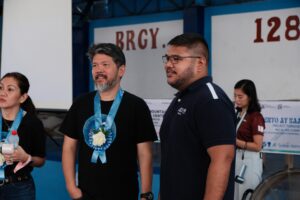
It was Community Development managed with both compassion and operational discipline.
Yet perhaps the most important part of the system was that SG Bobbit did not make himself the center of it.
Chairmen were encouraged to present their own accomplishments. Commissioners were given ownership of their initiatives. Volunteers were recognized, and sponsors were treated as partners rather than simply sources of funding.

He led, but allowed others to become the faces of the work.
He also challenged the perception that Community Development was primarily a training ground for aspiring members. Regular members were encouraged to take on project chairmanships, bringing their experience into community initiatives while creating opportunities for more members to discover their own leadership potential.
By the end of 2025, the directorate had completed 56 projects, generated more than ₱25 million in project value, and directly reached more than 31,000 beneficiaries.

The results were not measured only in numbers. The directorate earned national recognition for initiatives in public health, disability inclusion, elderly advocacy, and community impact. Among the highlights was KANser, which received the Best of the Best Local Community Impact Program recognition.
The year also closed with a Thanksgiving gathering for sponsors and partners who had supported the directorate’s work, followed by its final community initiative, Happy Jesus Day.

PUSO had come full circle.
Advocacies That Reached Beyond the Chapter
Among the defining initiatives of Bobbit’s term was Project SafeSteps, JCI Manila’s campaign addressing child sexual abuse and exploitation prevention.
Launched in Smokey Mountain, the initiative brought cyber-safety education and child protection discussions into the community. In partnership with Stairway Foundation and My Children’s House of Hope, the campaign sought to create safer spaces for conversations that are often difficult but necessary.

The advocacy gained wider visibility through the Miss Universe Philippines Charity Gala on April 30, 2025, presented by RepublicAsia and JCI Manila at Okada Manila. Gathering more than 1,000 guests, the event became an important fundraising and partnership platform for SafeSteps. Miss Universe Philippines officially joined the campaign, helping amplify its message and extend its reach.
The gala was broadcast through official online channels and reportedly reached more than two million viewers. It also provided an opportunity for JCI Manila members to participate in a landmark event that brought greater attention to the advocacy.

In Smokey Mountain, the directorate pursued a broader vision for youth development through initiatives connected to the Smokey Mountain Youth Center and Learning Center. These efforts sought to bring together education, sports, mentoring, and opportunities for young people who faced barriers to participation and development.
The work reflected a fundamental understanding: meaningful community development cannot be achieved through isolated interventions. Children and young people need safe spaces, access to education, opportunities to develop their talents, and people willing to invest in their future.

Another major initiative was KANser: Laban Para sa Buhay, a cancer intervention programme built around Knowledge, Action, and Nurture.
Through awareness activities, medical screenings for more than 500 individuals, 28 life-saving surgeries, and chemotherapy support for pediatric patients, the initiative demonstrated the importance of combining public awareness with practical medical assistance.
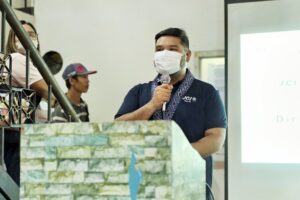
Its impact received national recognition at the 2026 JCI Philippines National Convention, where KANser was named Best of the Best – Most Outstanding Local Project.
The directorate also pursued livelihood and inclusion through projects such as Gupit at Pangarap and Tinig 2.0.
At Hospicio de San Jose, Gupit at Pangarap provided 37 beneficiaries with practical barbering skills. Working with the Manila Manpower Development Center, EPSA Philippines, and Eddica Barber Chair Supply, the initiative brought together professional training and donated equipment to help establish a pathway toward livelihood and greater independence.

Tinig 2.0, meanwhile, promoted assistive communication and inclusion for individuals with cerebral palsy and speech or motor impairments. In partnership with CP Cares and Communicare Therapy Center for Children, the initiative helped raise awareness of the importance of making communication accessible to everyone.

Together, these projects reflected the breadth of Bobbit’s Community Development portfolio: protecting children, supporting education, improving access to healthcare, creating livelihood opportunities, and ensuring that people with disabilities are not left unheard.
Turning Experience Into a Legacy of Leadership
SG Bobbit’s contributions were never measured solely through the communities reached. He also invested in the members who made those projects possible.
Clear documentation, structured presentations, coordinated planning, and recognition became important standards for project implementation. He encouraged members to take responsibility, understand the larger purpose behind their assignments, and recognize that successful projects require both compassion and disciplined execution.
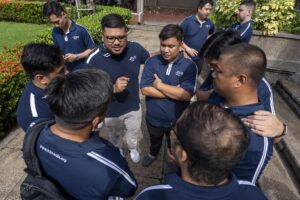
The directorate closed 2025 with five Temiong Awards and one Sinagtala Award, recognizing the teams and individuals who brought its initiatives to life.
The seven bids he personally handled also represented more than a year-end accomplishment. They gave him practical experience in identifying a project’s strongest story, documenting its impact, and communicating its value. Those lessons would become an important foundation for his next responsibility: helping develop the people and processes behind JCI Manila’s leadership and organizational operations.
From the Frontlines to the Engine Room
A successful directorship could easily have been enough. Instead, SG Bobbit returned to the Board in 2026, this time as Secretary General of JCI Manila.
It was a very different assignment.

Community Development offered visible projects, beneficiaries, turnovers, and awards. The Office of the Secretary General operated largely behind the scenes.
Governance. Documentation. Communications. Board processes. Compliance. Deadlines. Presentations. Coordination. Institutional memory.
These were responsibilities that often became visible only when something went wrong.
For SG Bobbit, however, the change in role did not require a change in philosophy. He simply brought the systems-building mindset he had developed in Community Development into the Secretariat.

His early contribution to the leadership year included delivering the session “How to Be a Chairman: Leadership Roles and Responsibilities” during the January 7 Chairmen and Commissioners’ Bootcamp and Induction.
Drawing from his experience managing projects and volunteer teams, he shared practical lessons on coordination, decision-making, clear expectations, communication, and accountability. It was a natural extension of his previous term: having experienced the demands of project leadership, he could now help prepare the people who would lead the chapter’s initiatives in the year ahead.
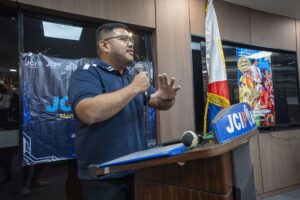
His commitment to developing future leaders continued on May 13, 2026, during JCI Manila’s committee lounge on bid writing. Together with Executive Vice President Matt Flores, he shared lessons with members preparing submissions for the Area Conference and National Convention.
For SG Bobbit, bid writing was never simply a documentation exercise. It was an opportunity to capture the purpose, people, challenges, and measurable impact behind a project.
Drawing from his experience handling seven bids in 2025, he encouraged members to learn from previous generations of bid writers, adopt proven practices, and improve on past experiences. He emphasized preparing early, aligning projects, and conducting internal bid conferences so that individual initiatives could contribute to a coherent program of advocacy.
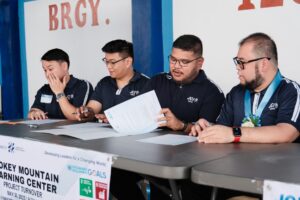
One of his most memorable reminders was to “collect then connect the dots” — a lesson about understanding how individual projects can contribute to a larger vision.
He also recognized that strong organizations are built through relationships. Recalling his experience working with Clifford Aw, he shared how differences during their earlier years eventually developed into genuine brotherhood through shared experiences and collaboration.

It was a reminder that leadership is not only about successful projects and efficient systems. It is also about the relationships that allow people to work together.
The Secretary General Who Finds a Way
As Secretary General, Bobbit helped strengthen the organizational processes that allow JCI Manila to function effectively.
Project presentations became more structured through standardized templates and clearer expectations. Secretariat checkpoints became regular, deadlines were established and monitored, and planning sessions were treated as genuine management tools rather than ceremonial exercises.

He helped drive the Board’s annual planning and midyear review, creating opportunities not only for the Executive Committee to assess directors, but also for directors to provide feedback upward.
One of the initiatives introduced during this period was a more structured Directors’ Evaluation, providing a mechanism for feedback, accountability, and continuous improvement.
The principle behind these efforts was straightforward: people should understand what is expected of them, know how they are performing, and be given the opportunity to become better.
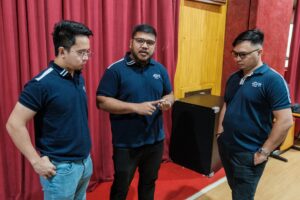
But titles alone do not define a leader. Reputation often reveals what a position description cannot.
By the middle of 2026, a particular perception of SG Bobbit had developed among members of the Board.
When something became complicated, when a director encountered a problem, when there was uncertainty about a process, or when something simply needed to get done, the instinct was often the same:
“Lapit tayo kay SG. May solusyon ‘yan.”
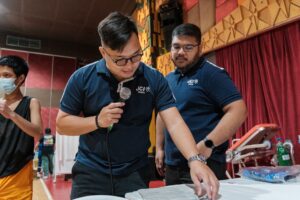
Go to SG. He’ll find a solution.
It became one of the simplest descriptions of his year as Secretary General.
He emerged as the Board’s troubleshooter, coordinator, and institutional anchor — not because every concern technically belonged to his office, but because he had developed the habit of helping people move problems toward solutions.

He could be firm about deadlines and demanding about standards. His approach was structured, organized, direct, and unafraid to hold people accountable.
But the firmness came with something equally important.
He checked on people.
Not just their projects. Not just their reports. Not just whether they had complied.
The people themselves.

How was work? How was the family? Was everything okay outside JCI?
That balance — high expectations paired with genuine concern — allowed him to pursue excellence without reducing leadership to compliance.
Excellence Behind the Scenes
Perhaps nowhere was that discipline more evident than in JCI Philippines’ Program Efficiency Awards, or PEA.
SG Bobbit helped spearhead JCI Manila’s compliance and reporting efforts, ensuring that the chapter’s activities across the Areas of Opportunity were properly documented, submitted, and accounted for.
The result was a major organizational achievement: JCI Manila earned the Diamond Seal of Efficiency, the highest PEA distinction.

For an office whose best work is often invisible, the recognition was particularly fitting.
Much of the Secretary General’s responsibility is precisely that: making sure the organization works even when nobody notices the machinery working.
SG Bobbit also chaired JCI Week, supported chapter communications and governance, strengthened Secretariat processes, and continued cultivating camaraderie within the Board and the wider organization.
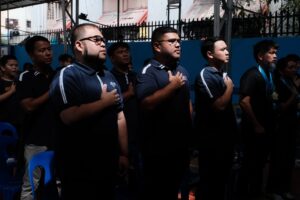
By the midyear planning session, perhaps the most meaningful recognition did not come in the form of a trophy. It came from his fellow Board members, whose feedback described him as among the best — if not the best — Secretary General they had experienced during their years in JCI Manila.
For someone whose work in 2026 happened largely behind the scenes, it was a powerful affirmation.
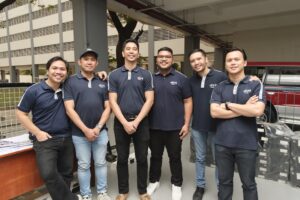
The leadership was being felt.
The Pattern Behind the Midas Touch
Looking at SG Bobbit’s 2025 and 2026 terms side by side reveals something more significant than two successful years.
A pattern emerges.
In 2025, he inherited a directorate and built a playbook. In 2026, he entered the Secretariat and strengthened its systems.
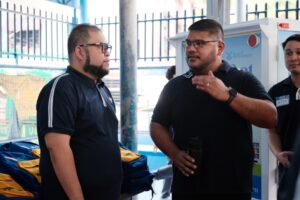
In 2025, he personally handled seven project bids and empowered commissioners and chairmen to own their initiatives. In 2026, he shared those lessons with members and worked to make directors and the Executive Committee more accountable to one another.
In 2025, he combined PUSO with disciplined execution. In 2026, he brought the same combination into governance.
Different offices. Different responsibilities. The same leadership DNA.

Set the vision. Build the system. Develop the people. Establish accountability. Execute relentlessly. Never lose the human touch.
Perhaps that is the real explanation behind the so-called Midas Touch.
There is nothing magical about it.
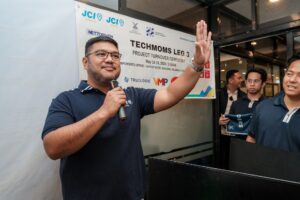
It is preparation repeated until it looks effortless. It is structure created before chaos arrives. It is knowing when to lead from the front and when to let a chairman take the spotlight. It is demanding excellence while remembering that volunteers have careers, families, and lives beyond the organization.
And it is understanding that leadership is not measured simply by how visible the leader becomes, but by how much stronger the organization becomes because that leader was there.
From Palawan, With PUSO
Born and raised in Puerto Princesa, Palawan, SG Bobbit’s professional journey also extends beyond JCI Manila. During the 2026 World Congress period, he was identified in a Manila Times report as Chief Operating Officer of the Palawan Group of Companies. The report covered the partnership between Palawan Group and JCI Manila, highlighting shared interests in financial inclusion, entrepreneurship, leadership development, and community empowerment.
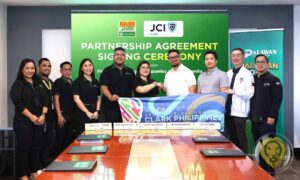
The values that have shaped his work across these responsibilities appear remarkably consistent: hard work, systems, accountability, service, and heart.
Perhaps that is why PUSO became such a natural battle cry. It was never merely branding. It reflected a personal understanding of what leadership should be.
In his remarks during the World Congress period, SG Bobbit emphasized that leadership goes beyond positions and claimed achievements. It is about taking action, working with others, and contributing to something bigger than oneself.

That message captures the thread connecting his two years of service.
As Community Development Director, he helped build programs intended to create lasting opportunities for communities. As Secretary General, he continued strengthening the people, processes, and organizational culture that allow those programs — and the organization itself — to succeed.

His story is not simply about moving from one position to another. It is about carrying lessons forward: from communities to committees, from project implementation to leadership development, and from individual accomplishments to collective progress.
Two Years Down. A Longer Story Ahead.
SG Bobbit’s JCI Manila career is still relatively young.
In just a few years, he has moved from Baby Jaycee to regular member, from Director to Secretary General, leaving measurable contributions at every stage.
His 2025 term demonstrated that he could build a directorate around a shared vision, personally handle seven project bids, empower members, and translate compassion into organized community impact.

His 2026 term showed that he could strengthen organizational systems, navigate challenges, support an entire Board, and help create an environment where people are expected to perform and encouraged to grow.
The awards are milestones. The projects are evidence of service. The systems are foundations for continuity. But perhaps the most enduring contribution is the culture of ownership, responsibility, and care he helped encourage among the people around him.

The Midas Touch, after all, is not about turning everything into gold. It is about recognizing potential, investing in people, and creating the conditions for good things to grow.
Because the true measure of leadership is not only what gets accomplished during a term. It is what continues to flourish after the term has ended.
From serving communities to strengthening leaders, SG Bobbit Castro continues to put PUSO into action. And if his first two years are any indication, the Midas Touch is only the beginning of a much longer story.
SEO by SEO-Hacker. Optimized and maintained by Sigil
© 2026 Asian Pearl. JCI Manila Official Publication. All Rights Reserved.