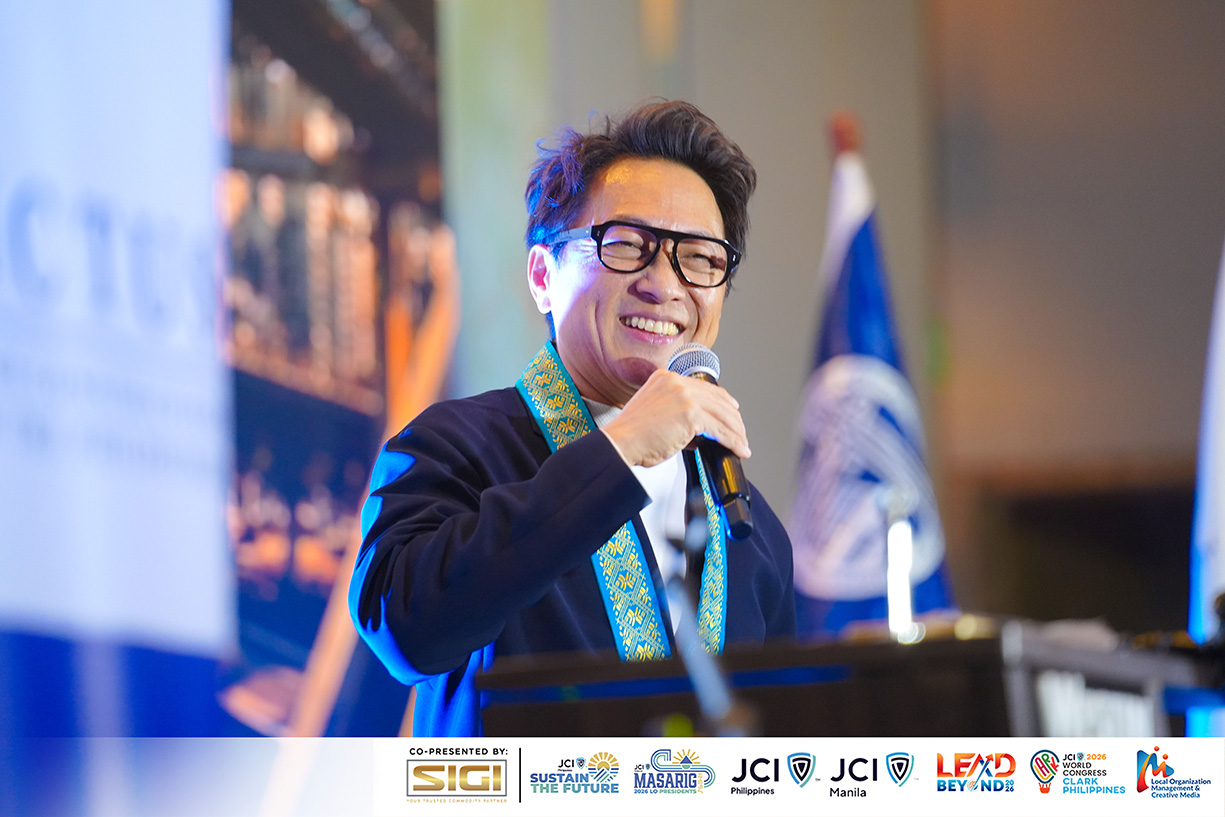
In the last major talk of JCI Manila’s “Constructing the Future” General Membership Meeting, Engr. Edgar Saavedra shared how Megawide grew from a company founded during a financial crisis into one of the Philippines’ major infrastructure players, with its sights now firmly set on housing, transportation, construction, and renewable energy.
Following a discussion on the future of Philippine real estate, JCI Manila’s “Constructing the Future” General Membership Meeting turned from identifying the country’s emerging opportunities to examining what it takes to actually build them.
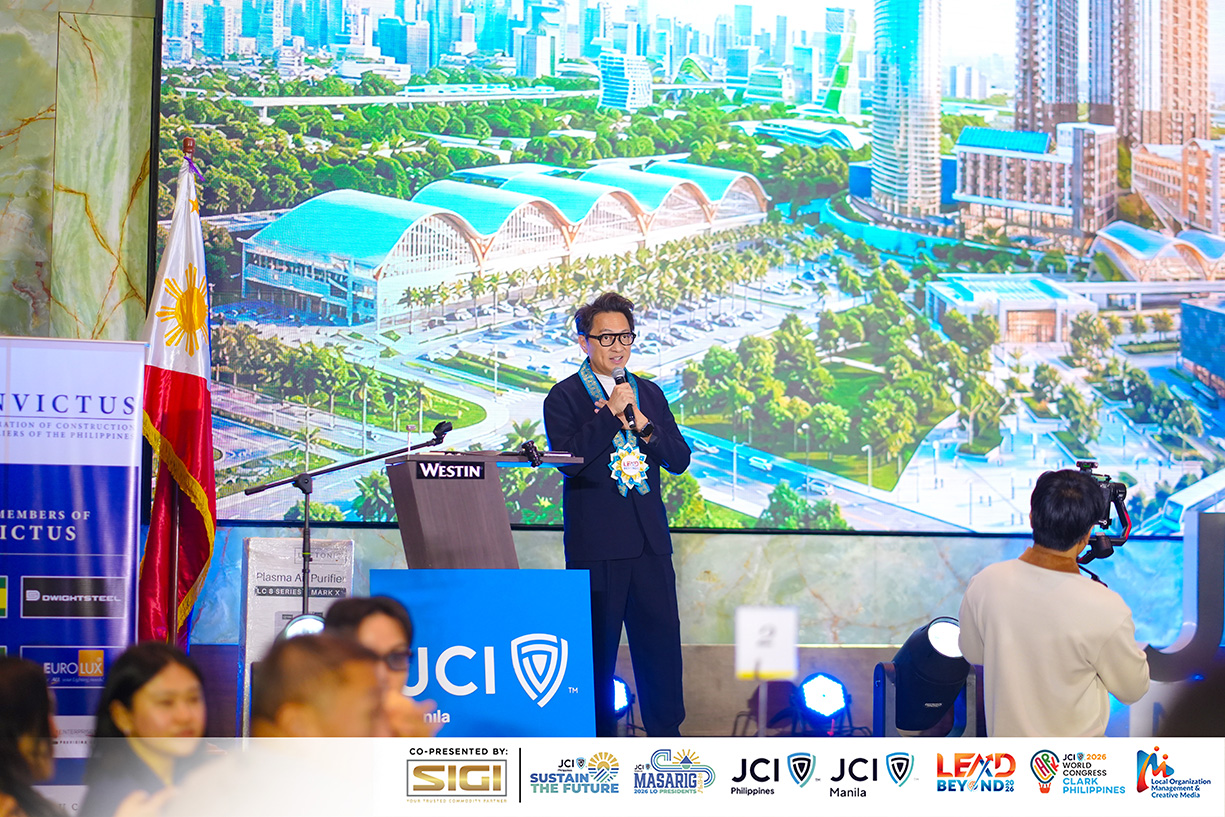
Engr. Edgar Saavedra of Megawide Construction Corporation took the stage at The Westin Manila on August 18 for his talk, “The Megawide Journey: Engineering a First-World Philippines.”
His talk traced Megawide’s development through five distinct periods: its founding in 1997, a period of growth beginning in 2007, scaling up in 2011, transformation beginning in 2013, and its present nation-building phase from 2020 onward. The chronology illustrated not only the expansion of a construction company, but also its gradual shift from contractor to infrastructure developer and partner in major national projects.
The talk complemented the broader theme of the evening. If the future of the Philippine economy depends on new sources of growth and investment, Engr. Saavedra focused on another side of that equation: developing the engineering capability, technology, capital, and infrastructure necessary to turn those opportunities into physical development.
Finding opportunity in crisis
Megawide’s story began at a difficult moment for the region.
The company was founded in 1997, at the height of the Asian Financial Crisis. Rather than presenting that environment simply as an obstacle, Engr. Saavedra described it as the setting in which Megawide learned one of the ideas that would define its development: finding opportunity in crisis.
The talk summarized the company’s beginnings in three points: Megawide was founded during the Asian Financial Crisis, it turned crisis into an opportunity for reinvention, and its story became one of seeing what could still be built even during difficult circumstances.
It was an important starting point for a talk centered on long-term thinking.
Construction is particularly vulnerable to economic cycles. Capital becomes expensive during downturns, property demand can weaken, and large projects may be delayed or cancelled. Yet Megawide’s experience, as discussed by Engr. Saavedra, showed that periods of disruption can also force companies to reconsider how they operate.
That willingness to adapt would eventually become central to the company’s growth.
Innovation became the way forward
By 2007, Megawide had entered what the talk described as its growing phase.
Instead of relying only on conventional construction methods, the company began adopting technologies and practices that could improve efficiency, consistency, and scale.
Engr. Saavedra identified three major developments during this period.
Megawide adopted advanced formworks technology. It integrated precast construction into its operations. It also leveraged global expertise through foreign partnerships.
The message of this portion of the talk was captured by a simple statement:
“Innovation became our way forward.”
For the construction industry, these were not merely technological upgrades.
Advanced formworks can help standardize repetitive construction processes. Precast technology moves portions of construction away from purely site-based methods and toward controlled manufacturing environments. Foreign partnerships, meanwhile, can provide access to technologies and technical knowledge already being used in more developed construction markets.
Together, these moves represented an attempt to industrialize aspects of construction.
Rather than treating every building as an entirely different process dependent primarily on traditional on-site methods, Megawide increasingly approached construction as something that could be engineered for repeatability, precision, and greater productivity.
Going public to scale up
The next turning point came in 2011, when Megawide entered what Engr. Saavedra described as its scaling-up phase.
The company launched its initial public offering in 2011, providing access to capital that could support a larger organization and more ambitious projects.
A year later, in 2012, Megawide opened its precast facility, which the talk identified as the second-largest in Southeast Asia. Engr. Saavedra described the facility as German-inspired and equipped with world-class technology.
The sequence was significant.
Innovation had already established a new construction philosophy within the company. Access to the capital markets then allowed Megawide to expand the infrastructure required to execute that philosophy at scale.
The precast facility became a physical representation of that strategy.
Instead of producing every structural component at the project site, precast technology allows building components to be manufactured under controlled conditions before being transported for assembly. For a construction company seeking to deliver large and repetitive projects, such a capability can support greater standardization and production capacity.
Megawide’s growth therefore became closely tied to a model that combined engineering, manufacturing, and construction.
From building projects to building social infrastructure
By 2013, Megawide’s evolution moved beyond scale.
Engr. Saavedra described this period as “transforming,” marked by a shift from building projects to building social infrastructure through public-private partnerships or PPPs.
The distinction is important.
A contractor can participate in a project by constructing a building or facility according to specifications. Infrastructure development requires a wider perspective because the projects themselves influence how communities travel, study, work, trade, and interact.
Engr. Saavedra highlighted four projects that represented this transition:
the DepEd School Infrastructure Project, Mactan-Cebu International Airport, Clark International Airport, and the Parañaque Integrated Terminal Exchange.
These projects span very different sectors, but they share one characteristic: each provides infrastructure that serves a broad section of society.
Schools address educational capacity.
Airports connect regions to domestic and international markets.
Integrated transport terminals organize the movement of commuters and vehicles within increasingly congested urban centers.
This was the stage in Megawide’s development when construction became more explicitly connected to nation-building.
Building schools as social infrastructure
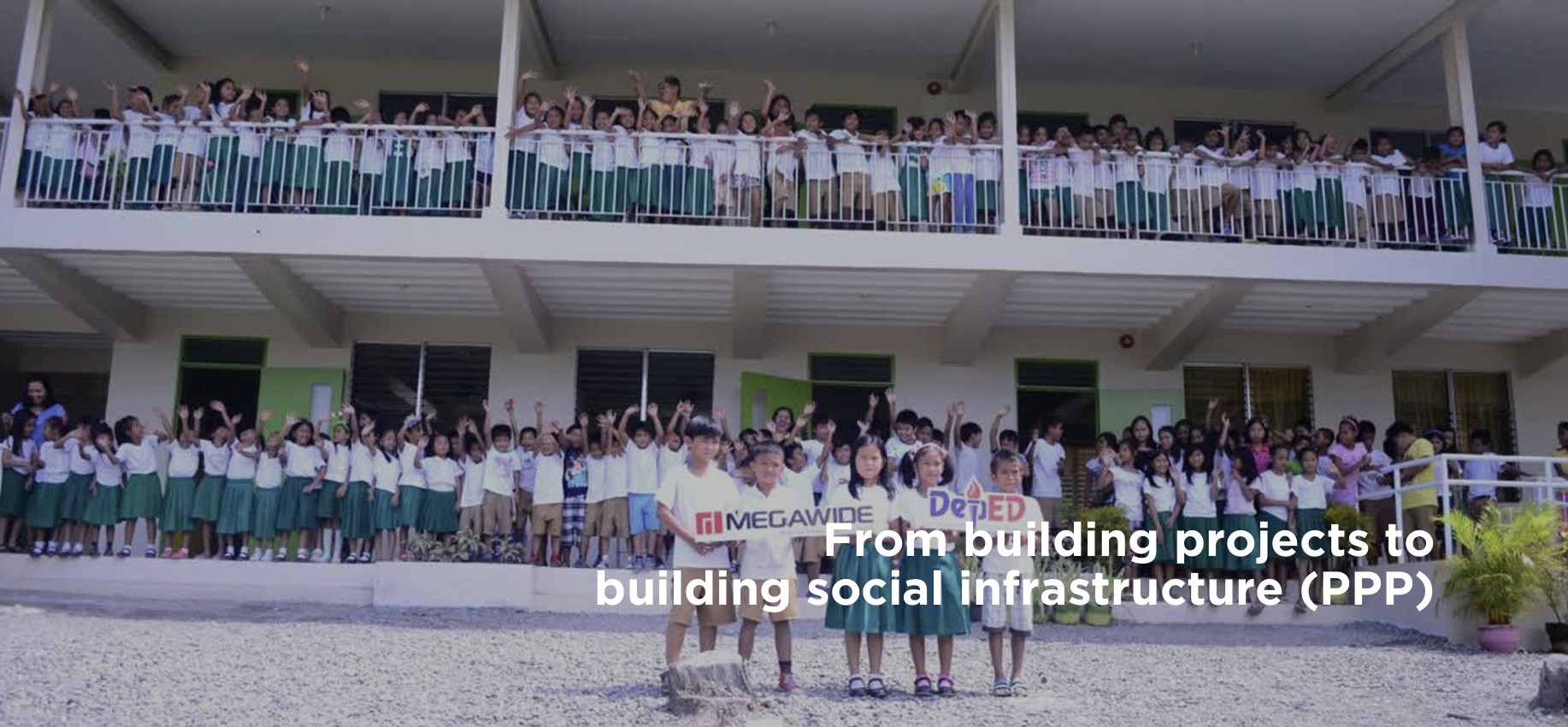
Among the examples discussed in Engr. Saavedra’s talk was the DepEd School Infrastructure Project.
One of the slides placed students and school buildings at the center of Megawide’s transformation from a project builder into a builder of social infrastructure.
It was an especially relevant example given the scale of the Philippines’ continuing classroom requirements.
School construction is different from purely commercial development because its economic return is not measured only in rental income or property appreciation. The infrastructure expands educational capacity and provides a direct public service.
For Megawide, it also demonstrated how technologies developed for efficient construction could be deployed on projects where repetition, standardization, and speed are particularly valuable.
A classroom shortage involving thousands of units cannot be addressed in the same manner as a single bespoke development. Meeting requirements at that scale demands systems capable of replication.
This connection between engineering efficiency and public need became an increasingly visible part of the company’s direction.
Airports and gateways to economic growth
Megawide’s move into infrastructure also placed the company behind major transportation gateways.
Engr. Saavedra specifically identified Mactan-Cebu International Airport and Clark International Airport among its transformative PPP infrastructure projects.
Airports occupy a particularly important place in economic development because their impact extends well beyond aviation.
Improved airport capacity can support tourism, trade, business travel, investment, and regional economic activity. The development of modern gateways outside the traditional center of Metro Manila can also contribute to a more geographically distributed pattern of growth.
Their inclusion in Engr. Saavedra’s talk therefore reinforced a larger theme: nation-building infrastructure is not simply about constructing larger facilities. It involves creating systems that allow economic activity to move more efficiently.
Connecting the city through land transport
The Parañaque Integrated Terminal Exchange, or PITX, was another project highlighted during the talk.
Its role reflects another challenge confronting Philippine cities: mobility.
A modern metropolis cannot function effectively if transportation systems are fragmented. Integrated terminals can bring different transport modes together, organize passenger transfers, and reduce the need for scattered roadside terminals.
In this sense, transport infrastructure shapes not only travel but also urban development.
Where people enter, leave, or transfer between transport networks influences the placement of commercial spaces, housing, workplaces, and other developments.
Megawide’s participation in such infrastructure illustrates how the company’s activities gradually expanded beyond individual buildings and into systems that influence how entire urban areas operate.
Nation-building as the present direction
Engr. Saavedra identified 2020 to the present as Megawide’s nation-building phase.
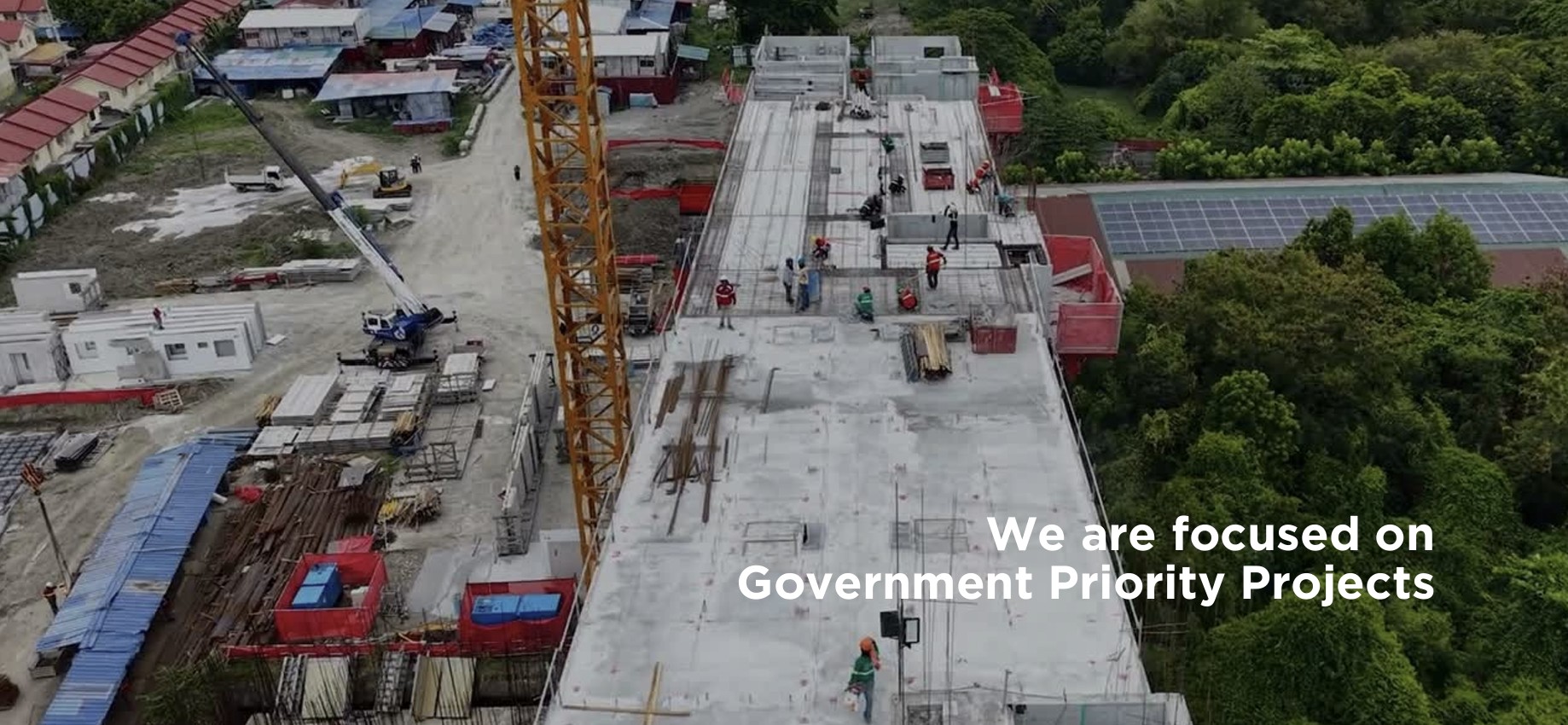
During this period, the company has increasingly aligned its activities with what it describes as government priority projects.
The talk identified three principal areas:
quality mass housing projects, transport infrastructure such as airports, rail and landports, and renewable energy.
The choice of sectors reflects some of the Philippines’ most persistent development requirements.
Housing addresses rapid urbanization and the need for affordable and dignified communities.
Transportation addresses congestion, connectivity, and the movement of people and goods.
Renewable energy addresses both increasing electricity requirements and the need for a more sustainable energy system.
For Megawide, these sectors also represent the next stage of its development from a traditional construction company toward a participant in long-term national infrastructure.
Quality mass housing
Housing was given a prominent place in Engr. Saavedra’s discussion of Megawide’s future.
The company’s focus on quality mass housing projects reflects the scale of the housing challenge in the country.
The word “quality” is particularly important.
Addressing a housing shortage is not simply a matter of producing the highest possible number of units. Housing must also function as a community. It requires access to transport, employment, schools, utilities, healthcare, commercial activity, and public spaces.
For a construction company with extensive experience in precast technology and standardized building systems, mass housing also presents a logical application of industrialized construction.
The challenge is to achieve scale without treating affordable housing as synonymous with compromised engineering or design.
Seen within the wider discussion of “Constructing the Future,” the potential impact is substantial. A country that needs large volumes of housing will require construction methods capable of delivering homes faster and more efficiently while maintaining standards.
Transport infrastructure remains central
Megawide also intends to continue focusing on transport infrastructure, specifically airports, rail, and landports.
These projects address one of the most visible constraints on Philippine competitiveness.
Economic growth becomes harder to sustain when workers spend hours commuting, goods move slowly between production areas and markets, and regional centers lack sufficient connections to national and international transportation networks.
Transport infrastructure therefore has a multiplier effect.
A rail line is not valuable only because trains operate on it. It changes commuting patterns and can influence real estate development around stations.
An airport does more than accommodate aircraft. It supports tourism, business travel, logistics, and regional investment.
A landport does more than organize buses. It can reshape the movement of commuters and help organize surrounding urban development.
For Engr. Saavedra, these forms of infrastructure are part of the physical foundation required for a more developed Philippines.
Renewable energy joins the construction agenda
The third major focus discussed for Megawide’s nation-building phase was renewable energy.
Its inclusion signals an important expansion in the meaning of infrastructure.
Electricity is fundamental to almost every other form of development. Manufacturing, transportation, residential communities, commercial centers, data infrastructure, hospitals, and schools all depend on reliable energy.
At the same time, future infrastructure must increasingly account for sustainability and long-term energy requirements.
Engr. Saavedra placed renewable energy alongside housing and construction as one of the three pillars the company intends to pursue over the next five to ten years. The final strategy slide showed the company’s continuing vision and mission centered on Housing, Construction, and Renewable Energy.
The next five to ten years
Engr. Saavedra concluded his talk by looking forward.
Megawide intends to keep its vision and mission over the next five to ten years, concentrating on three areas: housing, construction, and renewable energy.
The simplicity of the final slide belied the scale of the challenge.
Each of those sectors is central to the Philippines’ development.
Housing involves millions of Filipino families and the continuing need for affordable communities.
Construction remains necessary for everything from schools and hospitals to offices, transportation systems, and industrial facilities.
Renewable energy will increasingly determine whether future economic development can be supported by a stable and sustainable power supply.
Together, they represent both business opportunities and national necessities.
Engineering as a nation-building capability
Taken as a whole, Engr. Saavedra’s talk was not simply a corporate history of Megawide.
It was an argument for the role of engineering capability in national development.
The company began in 1997 during one of Asia’s most serious financial crises. A decade later, it was adopting advanced construction systems. It went public in 2011 to gain the scale required for larger ambitions. By 2013, it was participating in public-private partnerships and social infrastructure. From 2020 onward, its stated focus shifted further toward government priority projects and nation-building.
That progression provides a useful counterpoint to the broader questions raised during JCI Manila’s “Constructing the Future” meeting.
Economic growth can create opportunities, but opportunities alone do not build airports, classrooms, homes, railways, transport terminals, or energy systems.
They require engineering.
They require capital.
They require technology.
They require organizations capable of delivering projects at scale.
This is ultimately where Engr. Saavedra’s talk connected most directly with the theme of the evening.
Constructing the future is not only about imagining what a first-world Philippines could look like. It is about developing the capacity to build it.
In tracing Megawide’s journey from a company founded during crisis to one focused on major national infrastructure, Engr. Saavedra presented that capacity itself as a continuing work in progress, one that will be tested in the years ahead through housing, transportation, construction, and renewable energy.
As the title of his talk put it, the objective remains clear:
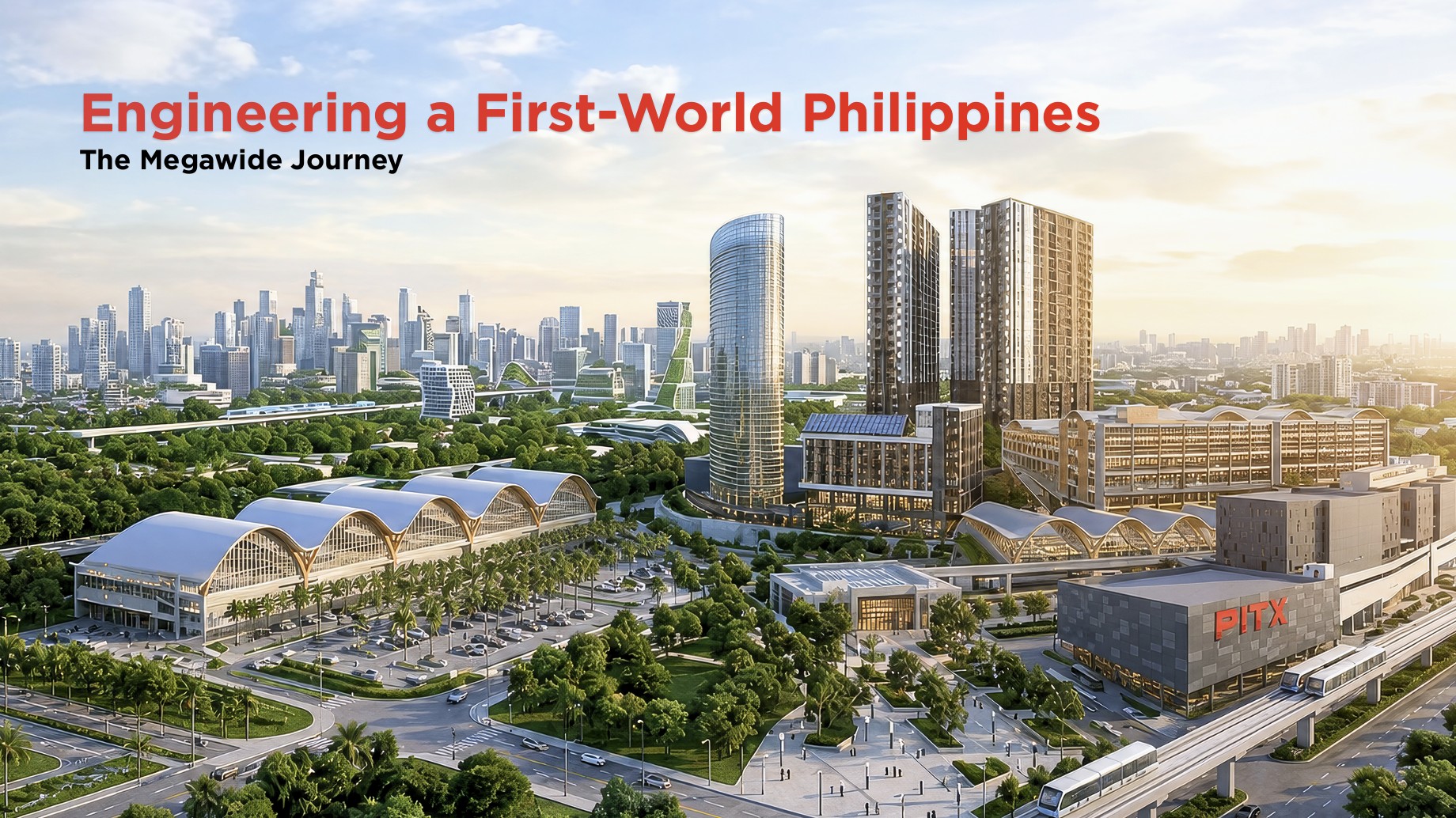
Engineering a First-World Philippines.
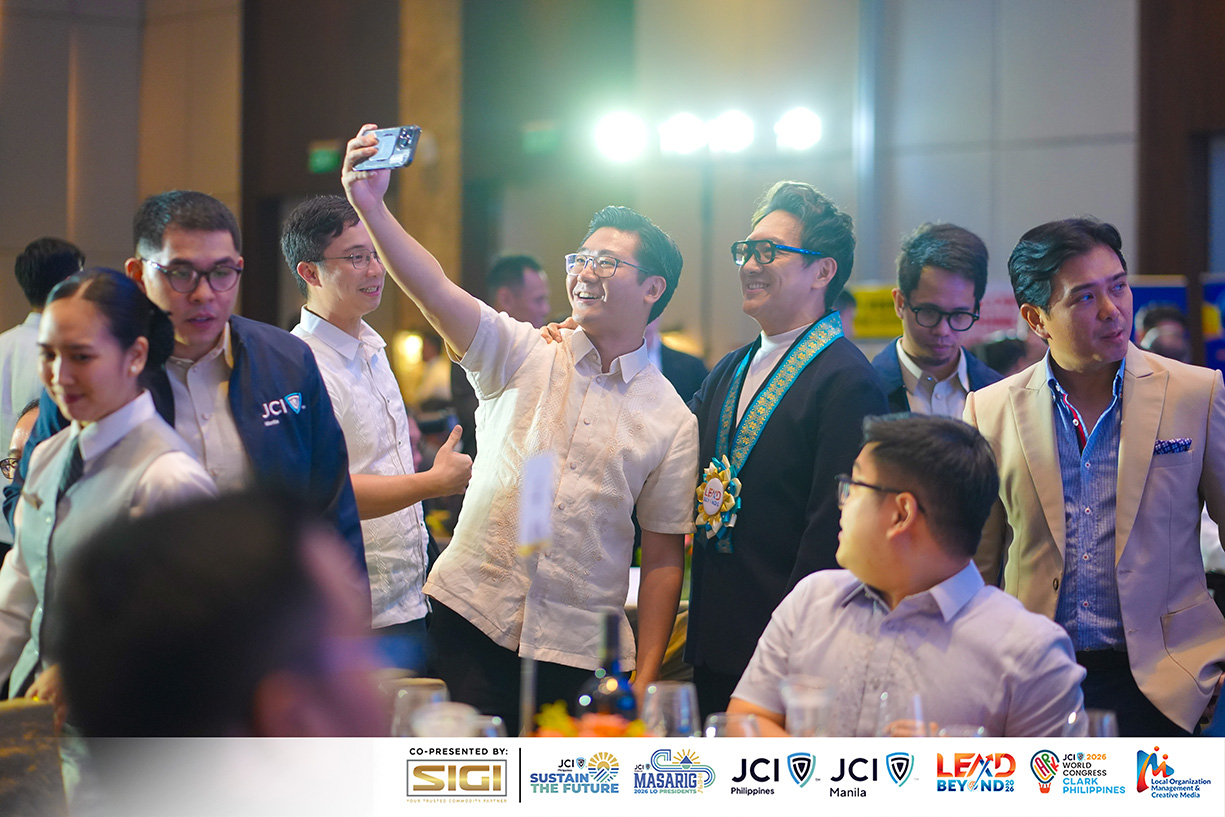
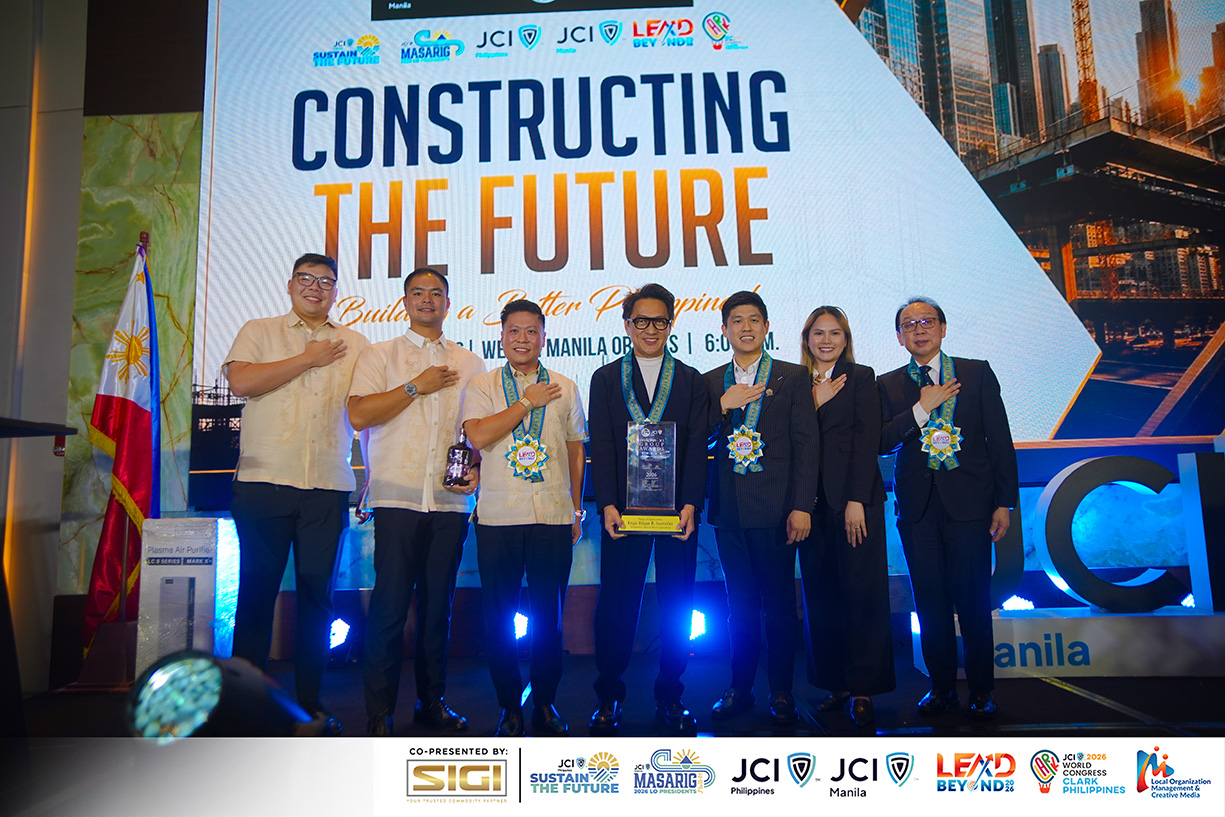
The General Membership Meeting was organized under the chairmanship of Matthew Siychia and was attended by members of JCI Manila together with representatives of Invictus, the country’s largest construction supplier organization, composed of more than 18 member companies that are leaders in their respective industries.
SEO by SEO-Hacker. Optimized and maintained by Sigil
© 2026 Asian Pearl. JCI Manila Official Publication. All Rights Reserved.