MANILA, Philippines — For families facing childhood cancer, the hardest part is often not a single hospital visit or medical procedure. It is the long journey that follows: the uncertainty, the financial strain, the difficult treatments, and the quiet courage required to keep going.
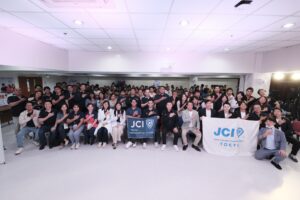
On August 14, 2026, JCI Manila and JCI Tokyo brought a measure of relief and joy to that journey through Care for Life, a long-term initiative held at the Philippine Children’s Medical Center (PCMC) for children with cancer and their families.
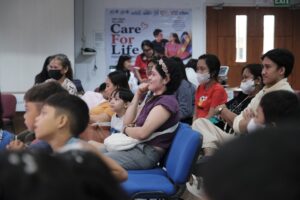
JCI Tokyo led by President Takashi Togawa, together with JCI Manila President Edison Ke and led by Project Chairman Chuck Alvarez and Vice Chairman Levy Macaraig, the initiative gathered 70 beneficiaries and their families for an afternoon centered on care, generosity, and hope.

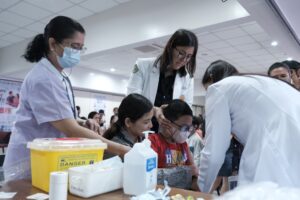
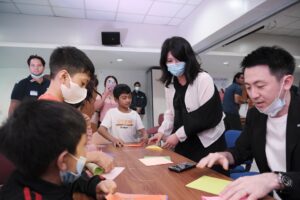
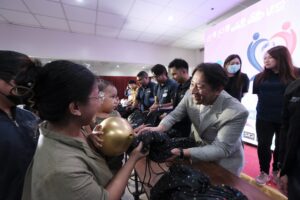
The program combined practical assistance with moments of simple happiness. Beneficiaries received free vaccinations, financial assistance, and gifts, while a hearty meal gave families an opportunity to sit together and share a moment away from the demands of treatment.
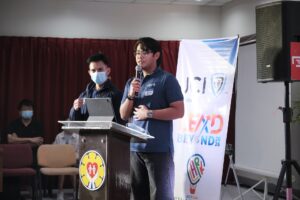
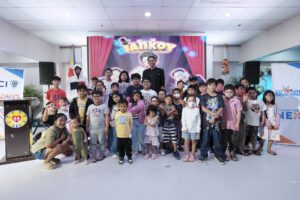
Adding warmth and excitement to the program were JCI Manila brother Jacy Ramirez and Shan Dominguez of It’s Showtime, who hosted the gathering and helped turn the afternoon into a celebration rather than simply another hospital activity.

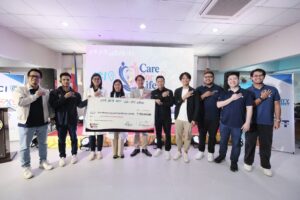
A ₱100,000 cash donation was also provided as part of the initiative, offering direct assistance to families navigating the financial realities of childhood cancer.
But behind the smiles and celebration lies a much larger public health challenge.
The World Health Organization estimates that approximately 4,700 Filipino children and adolescents aged 0 to 19 are diagnosed with cancer every year, with around 1,700 deaths annually. These figures are estimates and do not represent a complete nationwide cancer registry count.
The Philippine government’s own data also point to limitations in how childhood cancer is tracked. Available information is drawn from health reporting systems and cancer registries, meaning that reported cases may not capture every child who develops the disease.
That distinction matters.
A lower reported number does not necessarily mean fewer children are getting cancer. Delayed diagnosis, limited access to specialized treatment, incomplete registration, and disparities in healthcare access can all influence how many cases ultimately appear in official records.
The more troubling question, therefore, is not simply how many children develop cancer, but how many are able to survive it.
Historical Philippine data have shown a significant gap in childhood cancer survival compared with outcomes in higher-income countries. A study using the Manila and Rizal Cancer Registries found five-year relative survival of 32.9% for childhood leukemia and 47.7% for childhood lymphoma among Philippine residents diagnosed between 2001 and 2005.
Those figures are now more than two decades old and should not be treated as current national survival rates. They do, however, illustrate the longstanding disparities that have surrounded childhood cancer care in the Philippines.
The Department of Health has likewise recognized that survival in lower-resource settings can lag significantly behind high-income countries, where survival for some childhood cancers can exceed 80 percent.
Behind every percentage is a child.
Behind every child is a family.
And behind every family is a story that deserves to continue.
This is where Care for Life finds its purpose.
The initiative recognizes that supporting children with cancer cannot be reduced to medicine alone. Families need practical assistance. Children need moments of normalcy. And communities need opportunities to participate in the fight.
The August 14 program brought those elements together under one roof.
A magic show gave children a chance to laugh and wonder. Gifts offered moments of excitement. A shared meal brought families together. Vaccinations provided preventive care. The financial donation provided tangible assistance.
None of these things can replace treatment.
But together, they send a powerful message:
You are not fighting alone.
For JCI Manila and JCI Tokyo, that message is intended to continue long after the August gathering.
Care for Life is a long-term program, with another major initiative already planned for its next leg: a blood drive dedicated to supporting children with cancer.
The next phase will transform another simple act of generosity into potentially life-saving support. Every blood donor can contribute to the medical care of patients who may need transfusions throughout their treatment.
It is a reminder that humanitarian service does not always require extraordinary acts.
Sometimes, it means giving blood.
Sometimes, it means providing a meal.
Sometimes, it means giving a child a gift and watching their face light up.
And sometimes, it simply means showing up.
For one afternoon at PCMC, 70 children and their families were given something that cannot be measured in pesos, statistics, or medical records.
They were given a moment to smile.
That moment matters.
Because childhood cancer can make a child grow up too quickly. It can replace school days with hospital days and carefree afternoons with treatment schedules. Care for Life sought to give some of that childhood back, even if only for a few hours.
The project also reflects something fundamental about JCI: that leadership is not only about creating programs, but about creating programs that respond to real human needs.
JCI Manila and JCI Tokyo chose to invest not only in treatment-related support, but in dignity, companionship, and hope.
The fight against childhood cancer will require doctors, researchers, hospitals, governments, families, and communities working together. No single organization can carry it alone.
But every organization can choose to carry a part.
And on August 14, JCI Manila and JCI Tokyo carried theirs.
Because every child deserves the opportunity to dream beyond their diagnosis. Every family deserves to know they are not alone. And every act of kindness, no matter how small, can become part of a much bigger fight for life.
That is the heart of Care for Life.
Not simply helping children live longer, but helping them live with hope while they fight.
SEO by SEO-Hacker. Optimized and maintained by Sigil
© 2026 Asian Pearl. JCI Manila Official Publication. All Rights Reserved.