Department of Public Works and Highways (DPWH) Secretary Vince Dizon underscored the need to institutionalize faster and more accountable infrastructure delivery, positioning execution speed as a defining factor in national development.
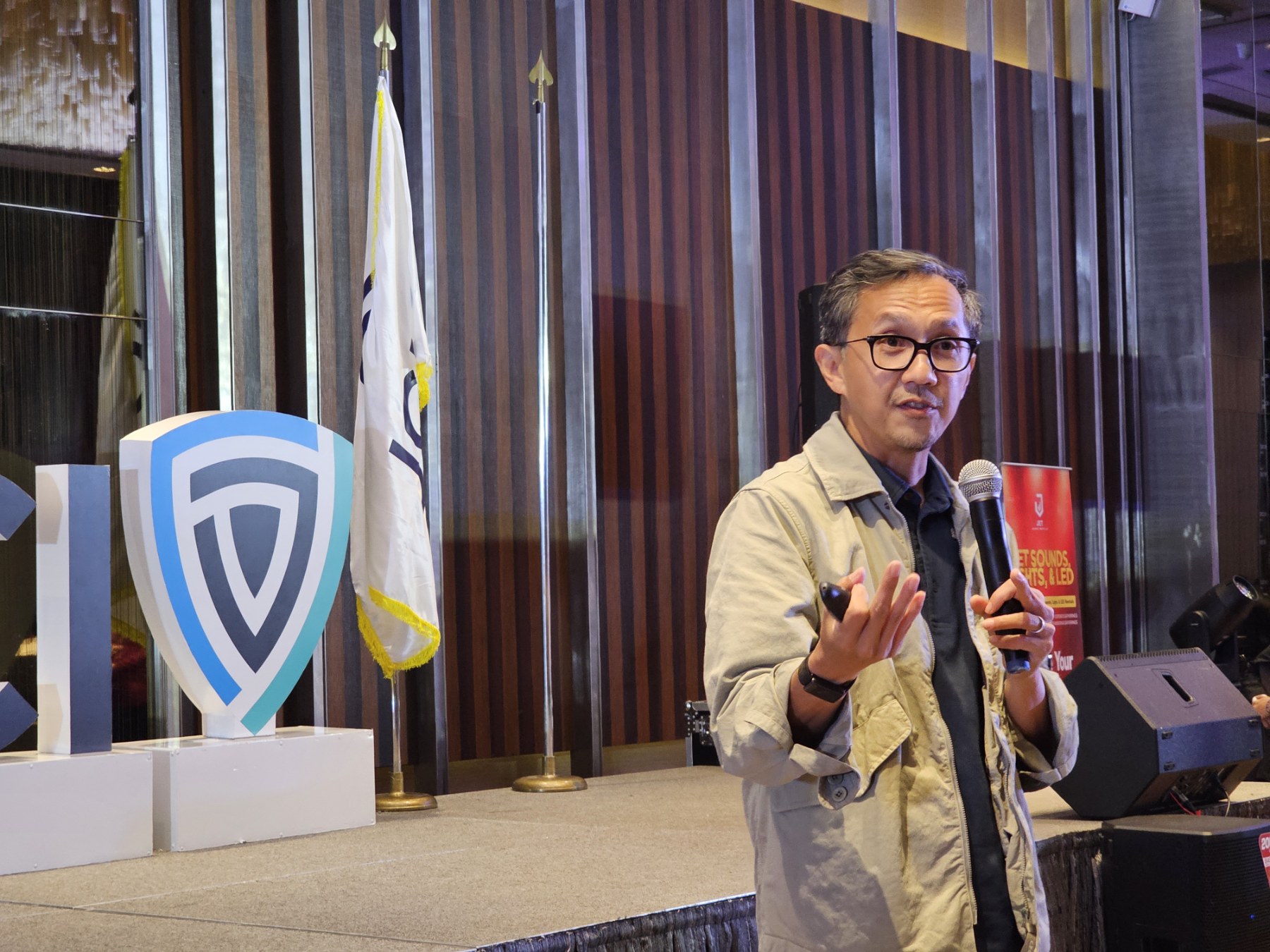
Speaking before members of JCI Manila during its BUILD Philippines General Membership Meeting on April 21 at Marco Polo Ortigas Manila, Dizon said the Philippines must transition from planning-heavy governance to results-driven implementation.
“The issue is not planning. The issue is execution,” he said, pointing to bureaucratic delays and fragmented coordination as persistent obstacles.
‘Emergency Speed’ as the New Standard


Dizon highlighted the government’s recent disaster-response efforts as a model for how infrastructure projects should be delivered moving forward.
He cited instances where critical structures, such as bridges and public facilities, were completed in a matter of weeks following calamities, demonstrating that rapid, high-quality construction is achievable under pressure.
“Our priority now is to replicate what we did during the typhoons and earthquakes,” Dizon said, referring to fast-tracked reconstruction efforts.
He emphasized that this same urgency must be applied not only in emergencies, but across all infrastructure programs.
“If we can do it during emergencies, we can do it for everyday infrastructure,” he added, effectively challenging agencies to adopt what insiders often describe as “emergency speed” governance.
Speed, Cost, and Quality Can Coexist


Challenging long-held assumptions in public works, Dizon asserted that speed does not have to come at the expense of cost efficiency or quality.
“It’s possible. The price can be right, construction can be fast, and quality can be maintained,” he said, reinforcing a three-pronged standard for infrastructure delivery.
This approach, he noted, requires disciplined project management, tighter contractor accountability, and streamlined approval systems.
At the core of the problem, Dizon said, is not funding but friction—layers of approvals, overlapping mandates, and slow coordination across agencies.
He stressed that infrastructure timelines are often dictated less by engineering complexity and more by administrative inefficiencies.
The solution, he said, lies in streamlining processes, tightening inter-agency alignment, and holding implementing bodies to stricter timelines.
Crackdown on Inefficiency and Corruption


Dizon also alluded to institutional reforms within DPWH aimed at restoring public trust in infrastructure programs.
Upon assuming office, he ordered sweeping organizational changes, including the review of personnel and stricter action against substandard and “ghost” projects, signaling a more aggressive stance against inefficiency and corruption in public works.
He emphasized that accountability must extend beyond completion rates to include integrity in procurement and implementation.
“Infrastructure is where governance becomes visible,” he said, noting that public works remain one of the most tangible indicators of government performance.
Infrastructure as an Integrated System


Beyond project delivery, Dizon framed infrastructure as a network of systems that collectively drive economic growth.
He noted that roads, transport links, and flood control measures must be understood in relation to one another, forming the backbone of mobility, commerce, and disaster resilience.
This systems-based approach, he said, is necessary to ensure that infrastructure investments translate into tangible improvements in people’s lives.
Strong Turnout Reflects Engagement, Raises Logistical Gaps
The BUILD Philippines forum, chaired by Lemuel Carrido and co-chaired by Christian Emmanuel Velarde, drew a turnout that exceeded the ballroom’s seating capacity, with some attendees unable to secure seats or meals during the program.


Organizers said care kits would be provided to affected members and emphasized the importance of pre-registration for future general membership meetings to better manage attendance and logistics.
The project was led by the Internal Affairs group under Vice President Cheeno Olayres, in collaboration with LOM and Creative Media Director Wayne Teeten, with support from commissioners Dan Michael Gallego, Angelo Balanon, and Jose Miggy Marty.
Dizon’s message underscored a broader shift in governance priorities—from planning to execution, from compliance to outcomes, and from isolated projects to integrated systems.
Also present at the forum were Nicolas Torre III and Margarita Gutierrez, whose discussions on governance and public service will be covered in subsequent reports.
SEO by SEO-Hacker. Optimized and maintained by Sigil
© 2026 Asian Pearl. JCI Manila Official Publication. All Rights Reserved.