For David Ramos, serving as Director for Community Development was never simply about completing a calendar of projects. From the beginning of his term, he carried a much bigger ambition: to create programs that would continue making a difference even after his year of leadership had ended.
“My ultimate goal was simple: to create community programs that would continue making an impact even beyond our term,” Dir. David shares.
That belief became the foundation of the Community Development Directorate’s work throughout the year. Sustainability was placed at the center of every initiative, with projects designed not merely to look good on paper or in photographs, but to respond to what communities genuinely needed.
For Dir. David, community development meant looking beyond one-time activities. It meant becoming a bridge—connecting communities with organizations, private partners, and government agencies that could help sustain the work long after a project was completed.
“Every initiative had to reflect what community development truly means: creating opportunities, building systems, strengthening partnerships, and leaving communities better equipped for the future.”
That philosophy also shaped how Dir. David viewed his role as a leader. The directorate was not starting from scratch. It was building upon years of work by previous Community Development directors, strengthening the foundations they had established while introducing new ideas, approaches, and methods of execution.
The goal was not simply to continue a legacy, but to make that legacy even more relevant, sustainable, and lasting.

Ironically, community development was never an area Dir. David considered himself particularly strong in when he first accepted the position.
“I’ve always been vocal about this: before taking on the role of Director for Community Development, community projects were never my strongest area in the chapter,” he admits.
Although he had already been exposed to community work during his university years, the scale and approach of JCI Manila’s community development initiatives presented an entirely different challenge.
Rather than allowing that uncertainty to define his leadership, Dir. David chose to learn.
Five strategies became his guide throughout the year.
The first was simple: talk to those who came before.
Dir. David made it a priority to seek out previous directors, learning not only from their best practices but also from their mistakes and challenges. Their experiences helped him understand what should be continued, what needed improvement, and what could be avoided.
The second was to understand the real problem of the community.
For Dir. David, a successful project begins long before the first activity takes place. It starts by listening.
Rather than creating projects simply because they are convenient to execute, the directorate first sought to understand the community’s actual needs and, whenever possible, identify the root causes behind them.
The third was planning early.
By October to December 2025, the directorate had already mapped out its major projects and programs for 2026. When January arrived, the focus was no longer on deciding what to do, but on executing what had already been planned.
That early preparation created room to secure partners, coordinate with stakeholders, prepare resources, and anticipate potential challenges.
The fourth was building a responsible and accountable team.
Dir. David understood that no directorate could succeed through the efforts of one person. His four commissioners and project chairmen needed to understand not only what had to be done, but why it mattered.
Finally, there was the importance of always having a contingency plan.
A lesson from his Community Affairs Vice President stayed with him throughout the year: projects are often “10% planning and 90% contingencies.”
Working with communities, partners, suppliers, government agencies, and tight timelines inevitably means that plans can change. A project can encounter unexpected obstacles at any moment.
For Dir. David, that meant every project needed a Plan B—and sometimes even a Plan C.
These five principles transformed what initially felt like an area of uncertainty into one of the most meaningful leadership experiences of his JCI Manila journey.
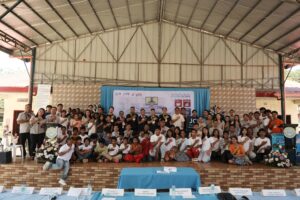
Looking back on the year, Dir. David says the achievement he is most proud of cannot be measured simply by the number of projects completed.
It is measured by the lives touched by those projects.
“This year reminded me why we say that service to humanity is the best work of life,” he says.
That philosophy became particularly meaningful through the directorate’s theme: Mind, Body, and Soul.
The three words represented a holistic approach to community development.
Mind meant equipping beneficiaries with knowledge, education, and awareness—tools that could help them make better decisions and create better opportunities for themselves.
Body meant providing tangible assistance, from medical treatment and livelihood skills to facilities, resources, and other forms of support that could improve quality of life.
And Soul meant uplifting morale, restoring hope, and reminding communities that there are people and organizations willing to stand beside them.
Through this approach, the Community Development Directorate was able to execute more than 40 projects, generate over ₱28 million in project value, and impact more than 180,000 lives.
Yet for Dir. David, the numbers are only part of the story.
Behind every statistic are real people. Real families. Real communities. Real stories.
And that is what made the work meaningful.
At the center of those accomplishments was a team of commissioners, chairmen, JCI Manila members, partners, government agencies, organizations, and individuals who collectively transformed ideas into action.
“The greatest measure of our work is not what we accomplished during our term, but what continues to live on in the communities after we are gone.”

No leadership journey is ever accomplished alone, and Ramos is quick to recognize the people who stood beside him throughout the year.
He gives special thanks to his four commissioners—Daryl David, Jansen Bernardo, Dave Mariano, and Anton Tamayo—for giving their time, energy, and commitment to the mission of the directorate.
To the chairmen who worked tirelessly behind the scenes, Dir. David expresses his appreciation for their patience, ownership, and dedication to delivering projects according to the needs of beneficiaries and the standards of the directorate.
He also credits Community Affairs Vice President Francis Deo for playing a significant role in his development as a director.
“Thank you for your leadership, guidance, and constant push throughout this journey,” Ramos says. “You challenged me when I needed it, guided me when I was uncertain, and helped me become better in this role.”
And then there is the chapter president, Edison Ke, whose confidence in Ramos gave him the opportunity to take on the responsibility in the first place.
“Thank you for believing in me and for trusting me with this responsibility,” Dir. David shares. “Your leadership and vision for the entire board gave me the confidence to believe that I could deliver what was expected of me and truly go Beyond the Next Generation.”
For Dir. David, however, what stood out most was the President’s presence.
During project turnovers and major activities, Pres. Eds was there—not only to witness the work, but also to support the chairmen and recognize the effort behind every project.
That kind of leadership, Dir. David says, mattered not only to him, but to the entire team.
Ultimately, the success of Community Development was never his alone.
“I may have led the directorate, but the success of Community Development belongs to everyone who believed in the mission, carried the work, and served alongside us.”
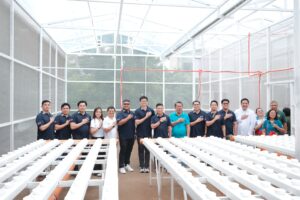
As Dir. David prepares to turn over his position to the next generation of JCI Manila leaders, he leaves behind one central message:
Your legacy should live far beyond your term.
A JCI leadership position lasts only one year. But the impact created during that year does not have to end when the turnover ceremony does.
“Community Affairs is the heart of the chapter,” Dir. David says.
JCI Manila itself was built through service and community work. Its identity is deeply connected to the belief that helping others is not only an act of service—it is also a way of developing better leaders and better people.
Dir. David does not pretend that the role is easy.
In fact, he believes that if the job is done properly, it may be among the hardest responsibilities a leader will ever undertake.
There will be sacrifices. There will be competing demands from personal life, family, business, and chapter responsibilities. There will be days when showing up feels difficult.
But there is also a responsibility that comes with being chosen.
“Out of more than 600 members, you were chosen to lead for that year,” Dir. David reminds future leaders. “People voted for you because they believed you were capable of carrying the responsibility.”
That trust, he believes, must be repaid through work ethic, consistency, and the willingness to show up.
His advice is straightforward:
Put your head down and keep working.

Do not chase recognition.
Do not measure success solely through awards, trophies, or applause.
In Community Development, some of the most meaningful forms of recognition are often silent.
It is the family whose life became a little easier because of a project.
The child who was given another opportunity.
The patient who received treatment.
The community that received knowledge, hope, or a better chance at the future.
Those moments may never appear on a stage. They may never come with a trophy. And the people who benefited may never know the names of the individuals who made the project possible.
But that does not make the impact any less significant.
“Somewhere, there are people you may never meet again who prayed for help,” Dir. David reflects.
“And through the work you chose to do, you became part of the answer to that prayer.”
That, ultimately, is the legacy David Ramos hopes to leave behind.
Not simply a year of projects.
Not simply numbers on a report.
But communities made stronger, partnerships made possible, systems made more sustainable, and people given another reason to believe that tomorrow can be better.
Because leadership may last for a year.
But service, when done with purpose, can last a lifetime.
SEO by SEO-Hacker. Optimized and maintained by Sigil
© 2026 Asian Pearl. JCI Manila Official Publication. All Rights Reserved.