How JCI Manila and JCI Tokyo turned international cooperation into an opportunity for education through the Smokey Mountain Learning Center.
A child’s future should never be determined by the circumstances into which they are born.
Yet in communities where poverty limits access to education, the opportunity to learn can become a privilege rather than a fundamental part of childhood. For many children in Smokey Mountain, Tondo, Manila, the challenges extend beyond the classroom. Limited resources, economic hardship, and the demands of helping their families make continuing their education difficult.
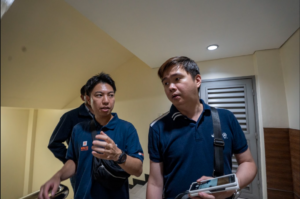
It was this reality that brought two JCI organizations together across borders.
Through the collaboration of JCI Manila and Japan’s JCI Tokyo, the Smokey Mountain Learning Center became more than a community facility. It became a shared commitment to giving children access to educational resources, opportunities, and a future that extends beyond their present circumstances.
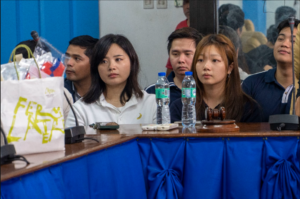
The initiative was strengthened by JCI Tokyo’s 2025 international development campaign, Unity for Action, which carried a clear message: quality education should be accessible to every child, regardless of where they come from.
A partnership built on a shared purpose
The relationship between JCI Manila and JCI Tokyo in Smokey Mountain did not begin with the Learning Center.
For more than a decade, the two organizations had worked together on initiatives supporting children in the community. One of their most notable collaborations was the Smokey Mountain Baseball Project, which used sports as a pathway toward scholarships and educational advancement.
The initiative recognized that meaningful community development requires more than providing temporary assistance. Children need opportunities to develop their abilities, discover their potential, and find pathways toward a better future.
That same philosophy would eventually find another expression through the Learning Center.
In 2025, JCI Tokyo brought renewed attention to educational inequality through Unity for Action. Under the theme of providing quality education for Filipino children, the initiative encouraged Japanese members, businesses, and ordinary citizens to take part in addressing an issue beyond their own borders.
The campaign established a donation platform and developed corporate partnerships to generate financial support. Through direct online contributions, fundraising activities, and promotional efforts at various JCI gatherings, approximately ¥1.3 million was raised.
But the initiative was never intended to end with fundraising.
The objective was to translate the generosity of supporters in Japan into something tangible for children in the Philippines.
Two chapters, one mission
The success of the collaboration depended on the complementary roles of both organizations.
In Japan, JCI Tokyo mobilized its members and wider network to raise funds, encourage participation, and increase awareness of the educational challenges faced by Filipino children.
In the Philippines, JCI Manila served as the local partner, helping connect the initiative with the community and supporting the development of the learning facility.
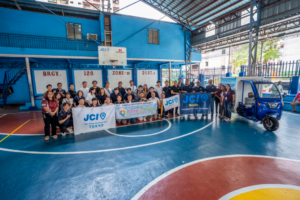
This partnership demonstrated the value of international cooperation within JCI. While one organization could mobilize resources and support from abroad, the other brought local understanding, relationships, and the ability to help translate those resources into meaningful community impact.
It was a collaboration built on more than financial contributions. It required communication, coordination, trust, and a shared understanding of what the community genuinely needed.
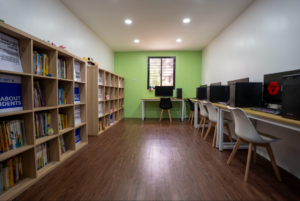
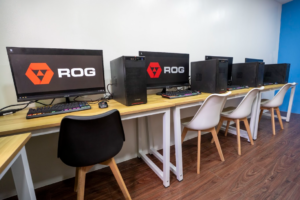
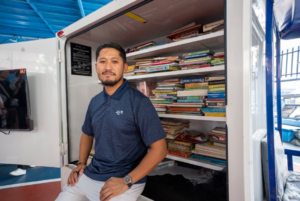
The result was the Smokey Mountain Learning Center, equipped with computers, educational materials, and books to provide children with resources that may otherwise have been difficult to access.
For a community where the rate of progression to higher levels of education was below 50 percent, the establishment of a dedicated learning facility represented an important step toward creating more consistent educational opportunities.
When international partnership becomes personal
One of the most meaningful parts of the initiative came when 26 JCI Tokyo members traveled to Manila to visit the completed learning facility.
For the Japanese delegation, the visit transformed the project from a fundraising initiative into a firsthand experience of the community it was designed to serve.
They met with JCI Manila members and local partner organizations, listened to their experiences, and gained a deeper understanding of the educational challenges facing families in Smokey Mountain.
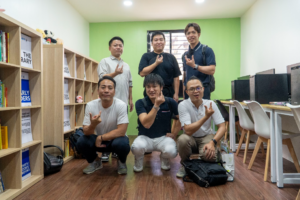
The visit allowed them to see how their contributions had been translated into a physical learning environment. It also gave them an opportunity to understand the realities behind the numbers, particularly the relationship between poverty, educational access, and the opportunities available to children.
For JCI Manila, the visit represented something equally important. It was an opportunity to strengthen the relationship with its Japanese counterparts and demonstrate how international support could create meaningful results when paired with committed local partners.
The experience reinforced that international cooperation is most powerful when it moves beyond meetings, donations, and formal agreements. It becomes meaningful when people from different countries come together, understand one another’s communities, and work toward a common purpose.
More than a building, an investment in the future
The impact of the Smokey Mountain Learning Center cannot be measured by its physical structure alone.
Its computers, books, and educational materials provide resources, but its greater value lies in the opportunities they help create.
A child who gains access to learning materials has a better chance of developing the skills needed for further education. A dedicated learning environment can encourage young people to continue studying even when circumstances at home and in the community make that difficult.
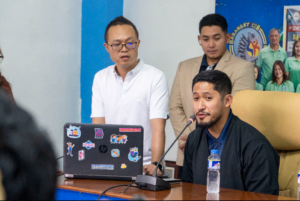
The facility also creates a foundation for continued educational support, bringing together JCI Manila, local organizations, educators, and international partners around a shared objective.
For JCI Tokyo, the project demonstrated how an international initiative could move from awareness and fundraising to tangible results overseas. For JCI Manila, it strengthened the chapter’s ability to work with international partners in addressing a local community need.
And for the children of Smokey Mountain, it created something that cannot be easily measured in financial terms: another place to learn, another opportunity to grow, and another reason to believe that their circumstances do not have to define their future.
A legacy that continues beyond borders
The collaboration between JCI Manila and JCI Tokyo is a reminder that the most meaningful international partnerships are not built simply through friendship between organizations. They are built through shared action and a willingness to work together on challenges that matter.
From the earlier Smokey Mountain Baseball Project to the establishment of the Learning Center, the relationship has continued to evolve while remaining grounded in a common belief: every child deserves the opportunity to build a better future.
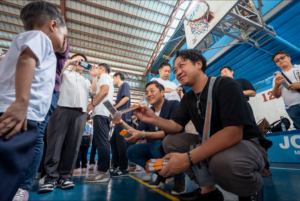
The Learning Center stands as an example of what happens when international generosity meets local commitment, when resources are matched with genuine community understanding, and when organizations work together beyond the boundaries of their own countries.
Because the true measure of international cooperation is not how far apart two organizations are, but how much they can accomplish when they stand together.
JCI Manila and JCI Tokyo did more than build a learning facility. They helped build a bridge between two countries, united by one shared belief: every child deserves a chance to learn, grow, and lead a better tomorrow.
SEO by SEO-Hacker. Optimized and maintained by Sigil
© 2026 Asian Pearl. JCI Manila Official Publication. All Rights Reserved.