Turning Plastic Pollution into Purpose, One School Chair at a Time
On June 4, 2026, leaders from JCI Manila, the Metropolitan Manila Development Authority (MMDA), and sustainability partner The Plastic Flamingo gathered at the Danilo Lim Conference Room on the 19th Floor of the MMDA Building for a meaningful discussion on environmental sustainability, community development, and strategic collaboration.
Representing JCI Manila were 2026 President Edison Ke, Executive Vice President Matt Flores, Executive Treasurer Joshua Aragon, Vice President for Community Affairs Deo Francisco, Director for Special Projects Rocky Cebrero, Commissioners for Special Projects Tash Ancha, George Co, and Ram Gutierrez, together with Project Chairman Leeroy Shoko and Co-Chairman Philip Caldito.
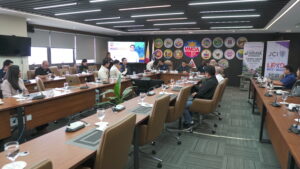
The MMDA delegation was led by Chairman Atty. Romando Artes, accompanied by Director Michael Gibson of OAGMP-PPSDS, Director Francisco Martinez of HPSEPO, and Director Hurdy Denosta of SWMO.
The meeting served as a platform to present Project Hiraya, one of JCI Manila’s flagship sustainability initiatives, while also opening discussions on future collaboration between JCI Manila and MMDA in support of both environmental programs and international engagements.
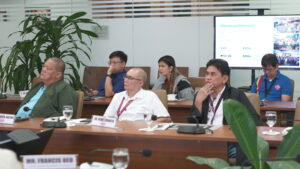
Strengthening Partnerships for Sustainable Impact
The program commenced with opening remarks from Executive Vice President Matt Flores, who introduced JCI Manila and its long-standing commitment to developing young leaders through meaningful community impact projects.
EVP Matt highlighted the organization’s vision of creating sustainable programs that address real societal needs while empowering communities through leadership and service. He shared how JCI Manila continues to champion projects that create measurable outcomes in education, environmental sustainability, and community development.
Beyond discussing community initiatives, EVP Matt also presented JCI Manila’s preparations for the 2026 JCI World Congress, one of the largest global gatherings of young leaders, entrepreneurs, government officials, and changemakers from around the world.
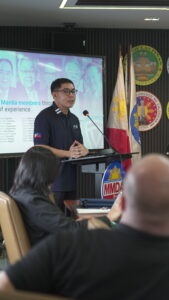
As part of the discussion, JCI Manila formally invited MMDA to support the 2026 JCI World Congress, recognizing the agency’s vital role in urban management, environmental sustainability, public service, and infrastructure coordination. The invitation highlighted the opportunity for MMDA to become a valuable partner in welcoming thousands of international delegates to the Philippines while showcasing the country’s capabilities, hospitality, and commitment to sustainable development on the global stage.
The conversation reflected a shared vision of collaboration between government institutions and civic organizations in creating meaningful impact both locally and internationally.
Introducing Project Hiraya
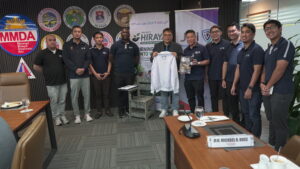
The centerpiece of the meeting was the presentation of Project Hiraya, led by Project Chairman Leeroy Shoko.
Named after the Filipino word “Hiraya,” which symbolizes dreams, aspirations, and imagination, the project seeks to address two critical challenges facing many communities today: plastic waste pollution and the lack of adequate school furniture in underserved educational institutions.
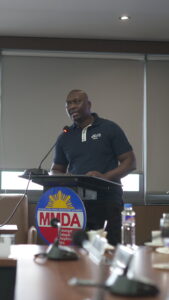
Chair Leeroy introduced Project Hiraya as an innovative circular economy initiative that transforms discarded plastic waste into functional school furniture for communities in need. During the presentation, he showcased sample products manufactured from recycled plastic materials, demonstrating how waste can be converted into durable and practical educational resources.
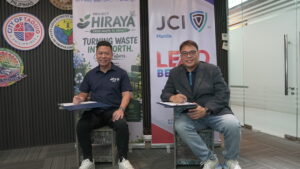
More than simply producing chairs and desks, Project Hiraya aims to create a sustainable ecosystem where environmental responsibility directly benefits education. Every piece of furniture produced represents plastic waste removed from the environment and transformed into a resource that helps improve learning conditions for Filipino students.
Chair Leeroy also introduced JCI Manila’s sustainability partner, The Plastic Flamingo (The Plaf), whose expertise in plastic collection and recycling plays a critical role in bringing the project’s vision to life.
The Plastic Flamingo: Turning Pollution into Possibility
Representing The Plastic Flamingo was Cyril Caporcin, who shared the organization’s remarkable journey and environmental impact since its establishment in 2018.
Founded with the mission of addressing marine plastic pollution and promoting circular economy solutions, The Plastic Flamingo has become one of the Philippines’ leading social enterprises in waste recovery and plastic transformation. Through an extensive collection network and innovative recycling systems, the organization converts difficult-to-recycle plastics into eco-products, construction materials, and educational furniture.
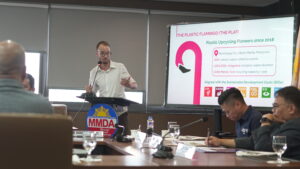
During his presentation, Cyril reported that The Plastic Flamingo has successfully collected and recycled more than 3 million kilograms of plastic waste since its inception.
What would otherwise have ended up in waterways, landfills, and coastal ecosystems has instead been transformed into products that create meaningful social impact.
One of the organization’s most notable accomplishments is its school chair program. To date, The Plastic Flamingo has delivered 5,870 school chairs and assisted more than 36 schools nationwide, helping improve learning environments while simultaneously reducing plastic pollution.
These chairs are manufactured entirely from recycled plastic materials, demonstrating how environmental challenges can be transformed into practical solutions for education.
The presentation underscored the powerful role innovation can play in addressing some of society’s most pressing challenges. Through partnerships with schools, corporations, local governments, and community organizations, The Plastic Flamingo continues to prove that waste can become a valuable resource when paired with creativity, technology, and collective action.
A Shared Commitment to the Future
The meeting highlighted the strong alignment between MMDA’s environmental objectives and JCI Manila’s commitment to sustainable community development.
Project Hiraya represents more than a recycling initiative—it is a model for how government agencies, civic organizations, and social enterprises can work together to create solutions that generate both environmental and social value.
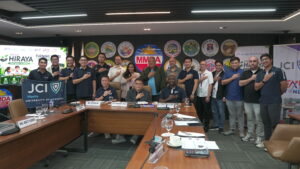
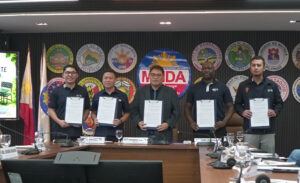
The presence of JCI Manila’s leadership team, including President Edison Ke, EVP Matt Flores, VP Deo Francisco, Director Rocky Cebrero, Commissioners Tash Ancha, George Co, and Ram Gutierrez, alongside MMDA officials and representatives from The Plastic Flamingo, demonstrated a collective commitment to building programs that create lasting impact.
Through Project Hiraya, JCI Manila continues to champion innovative approaches that empower communities while protecting the environment. At the same time, the organization’s invitation for MMDA to support the 2026 JCI World Congress reinforces its commitment to fostering partnerships that extend beyond individual projects and contribute to national and global conversations on leadership, sustainability, and development.
From Waste to Worth
As discussions concluded, one message resonated throughout the room: sustainability is not merely about reducing waste—it is about creating value.
Project Hiraya transforms plastic pollution into school furniture. It converts environmental challenges into educational opportunities. It creates a pathway where collaboration, innovation, and service come together to benefit future generations.

With the support of partners such as The Plastic Flamingo and the engagement of institutions like MMDA, JCI Manila continues to demonstrate that meaningful change begins when visionary leaders choose to act.
Because where others see waste, Project Hiraya sees opportunity.
And where others see a problem, JCI Manila sees a chance to build a better future—one recycled chair at a time.
SEO by SEO-Hacker. Optimized and maintained by Sigil
© 2026 Asian Pearl. JCI Manila Official Publication. All Rights Reserved.