From government offices to farming communities, conservation sites, and disaster-response training grounds, Dir. Rocky Cebrero’s year has been defined by one central idea: turning relationships into opportunities for meaningful action.
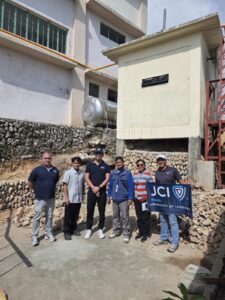
There is a particular kind of work that rarely happens in front of an audience.
It takes place in conference rooms, government offices, courtesy meetings, project briefings, partnership discussions, and long conversations about what might be possible.
There may be no stage. No ribbon-cutting. Sometimes, there is not even a finished project to photograph yet.
But this is where many projects begin.
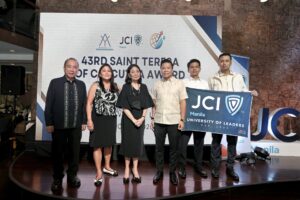
For Dir. Rocky Cebrero, Director for Special Projects and Government Affairs of JCI Manila, much of the work of 2026 has been about building those beginnings.
The role places him at an unusual intersection within the chapter. Special Projects is expected to identify and develop initiatives beyond the regular directorate structure, while Government Affairs requires the chapter to establish meaningful relationships with public institutions and government leaders.
The two functions converge around a simple proposition: a strong relationship should eventually create an opportunity to serve.
JCI Manila officially lists Dir. Rocky as its 2026 Director for Special Projects and Government Affairs under the Board led by Pres. Edison Ke.
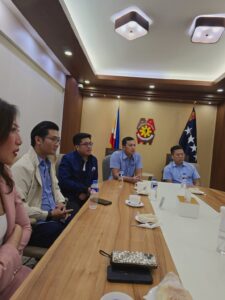
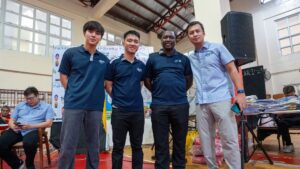
Throughout the year, that mandate has taken the directorate from Baguio to Mindoro, from farming communities in Quezon to discussions with the Metropolitan Manila Development Authority, and from police leadership to disaster-response training.
The result is a portfolio that reveals a broader direction for Special Projects: not simply creating activities, but building institutional relationships that can open doors to larger and more sustainable initiatives.
FROM COURTESY VISITS TO COLLABORATION
One of the most visible aspects of Dir. Rocky’s work has been his engagement with government institutions.
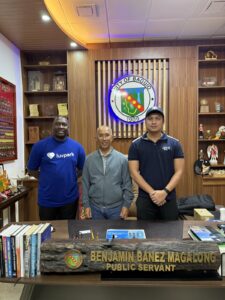
In March 2026, the JCI Manila Special Projects Team traveled to Baguio City for a meeting with Mayor Benjamin Magalong. The engagement was organized around the possibility of establishing a longer-term partnership between JCI Manila and the city government, with several community initiatives discussed during the meeting.
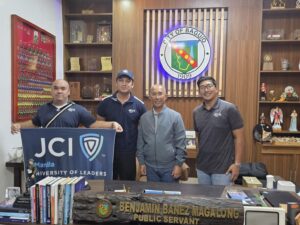
Among the proposals was an Indigenous Peoples Education Center at Pinget High School, a project intended to provide a dedicated learning environment supporting culturally responsive education for indigenous students.
What made the Baguio engagement notable was that it went beyond a single project.
The discussions included opportunities for JCI Manila to establish a sustained presence in Area 1, while also giving newer members an opportunity to identify and develop projects of their own.
It demonstrated one of the central functions of the directorate: opening the door first, then allowing the projects to follow.
TURNING GOVERNMENT RELATIONS INTO ENVIRONMENTAL ACTION
That approach became even more visible in JCI Manila’s engagement with the Metropolitan Manila Development Authority.
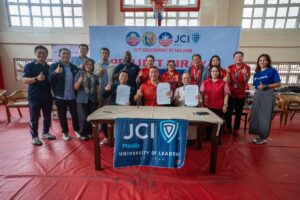
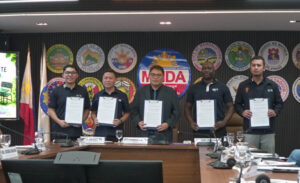
On June 4, 2026, JCI Manila leaders met with MMDA officials and sustainability partner The Plastic Flamingo to discuss environmental sustainability, community development, and potential institutional collaboration. Dir. Rocky was part of the JCI Manila delegation alongside President Edison Ke, EVP Matt Flores, Executive Treasurer Joshua Aragon, VP for Community Affairs Deo Francisco, commissioners Tash Ancha, George Co and Ram Gutierrez, and project leaders Leeroy Shoko and Philip Caldito.
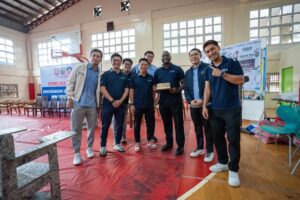
At the center of the meeting was Project Hiraya.
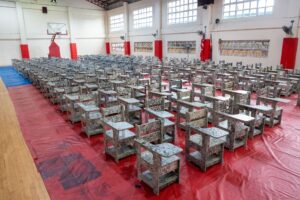
The project takes a problem that is usually viewed through the lens of waste management and reframes it as an opportunity for education.
Project Hiraya seeks to transform discarded plastic into school furniture for underserved communities. Its partnership with The Plastic Flamingo brings together environmental recovery, recycling, education, and community development.
According to the project coverage, The Plastic Flamingo has collected and recycled more than 3 million kilograms of plastic waste since its establishment and has delivered 5,870 recycled school chairs to more than 36 schools.
For JCI Manila, the initiative also became a platform for deeper government engagement.
During the MMDA meeting, JCI Manila formally invited the agency to support the 2026 JCI World Congress, connecting a local sustainability initiative with one of the chapter’s largest international engagements of the year.
That is where the Special Projects and Government Affairs mandate becomes particularly significant.
The relationship is not simply the objective.
The relationship becomes the infrastructure through which projects can happen.
FARMING, TECHNOLOGY AND THE FIELD
Special Projects also moved beyond Metro Manila.
In Quezon province, Farm Fresh brought together JCI Manila, AniTech and Sentrong Pamilihan in an agricultural technology pilot designed to provide farmers with practical tools for monitoring growing conditions.
The initiative uses technology to monitor factors such as temperature, humidity, light and air quality, providing farmers and agricultural consultants with information that can help guide decisions on farm management.
Farm Fresh is being implemented under the 2026 Special Projects Directorate led by Dir. Rocky, while the concept was initially developed under Executive Treasurer Joshua Aragon during his earlier work in Special Projects.
That distinction is important.
The project illustrates how a Special Projects directorate can inherit an idea, develop the necessary partnerships, and move it toward on-ground implementation.
The initiative is currently a pilot, but its longer-term objective is to share learnings from the field and explore how practical technology can support farmers more broadly.
It is a different model of community development from a traditional one-day outreach.
Instead of simply providing assistance, the project attempts to give farmers better information and tools with which to do their existing work.
PROTECTING THE TAMARAW
Another major undertaking brought the directorate into one of the country’s most important conservation efforts.
In April 2026, JCI Manila’s Tamaraw Guardians Initiative supported the annual Tamaraw Population Count at Mt. Iglit-Baco Natural Park in Mindoro.
The initiative focused on supporting the rangers who operate in difficult and remote conditions. JCI Manila provided field equipment including tents, rain gear, uniforms, hammocks, thermal blankets and lighting equipment.
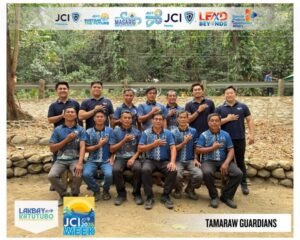
The support was subsequently institutionalized through a Deed of Donation with DENR MIMAROPA, signed on April 23, 2026, by DENR MIMAROPA Regional Executive Director Felix S. Mirasol Jr. and JCI Manila President Edison Ke.
Dir. Rocky was among the JCI Manila leaders representing the organization during the engagement, together with EVP Matt Flores, Executive Treasurer Joshua Aragon, VP for Community Affairs Francis Deo, Project Chairman Jose Lapez and Project Vice Chairman Narix Antonio.
The significance of the initiative extends beyond the donated equipment.
It demonstrates how a JCI Manila project can move from direct assistance toward an institutional partnership with a government agency responsible for conservation.
The equipment supports the people doing the work on the ground.
The partnership helps create a framework for continuing that support.
PREPARING FOR THE NEXT EMERGENCY
The directorate’s work has also entered the field of disaster preparedness.
ALERTO Summit 2026, organized by JCI Manila in partnership with the Philippine Army’s 525th Engineer Combat Battalion, was developed as a disaster-risk response training program. The program included an on-ground simulation scheduled for June 17 to 19, 2026.
The initiative reflects another dimension of Special Projects: identifying areas where JCI Manila can bring together civic leadership, government institutions and specialized expertise.
Rather than treating disaster response solely as an emergency concern, ALERTO approaches preparedness as a skill that can be developed before disaster strikes.
The partnership with the Philippine Army’s engineering unit gave the program an operational dimension that a conventional seminar could not provide.
It also reflects the increasingly institutional character of the directorate’s work.
BUILDING RELATIONSHIPS WITH THE POLICE
Government Affairs has not been limited to community projects.
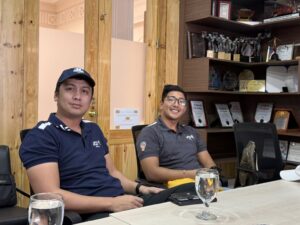
Dir. Rocky was also part of JCI Manila’s engagement with the Philippine National Police surrounding the Gimenez Awards and potential future community initiatives.
During a courtesy meeting with PNP leadership, JCI Manila presented the Gimenez Awards, which recognize outstanding police service, while also discussing possible collaboration on grassroots programs involving peace and order, community development and public engagement.
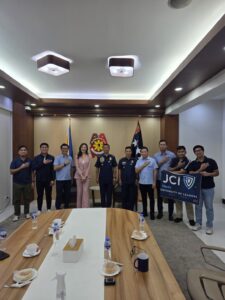
The meeting brought together JCI Manila leaders and senior government officials, including PNP Chief Jose Melencio Nartatez Jr. and Department of Justice Undersecretary Margarita Gutierrez.
While no formal agreement was signed during that particular meeting, the parties agreed to continue discussions and explore concrete projects following the awards process.
That detail is important because it captures the nature of Government Affairs work.
Not every meeting immediately produces a project.
Sometimes the achievement is establishing the relationship that makes the future project possible.
EXPANDING THE PARTNERSHIP NETWORK
Dir. Rocky’s role has also placed him in several of JCI Manila’s broader institutional partnerships.
In February, JCI Manila renewed and expanded its partnership with ABS-CBN Foundation, marking the second year of collaboration between the organizations.
The renewed partnership expanded JCI Manila’s support beyond the previous year’s work with Bantay Bata 163 to include Programa Genio, GaLing Pamayanan, and the Child Safe Schools initiative.
Dir. Rocky attended the MOA signing at Okada Manila alongside President Edison Ke and representatives of the Foundation’s various programs.
The partnership illustrates another important feature of the Special Projects portfolio: collaboration does not necessarily mean creating a completely new program.
Sometimes, it means finding established institutions already doing meaningful work and determining where JCI Manila can add its manpower, network, resources and leadership.
THE SPECIAL PROJECTS DIRECTORATE IN NUMBERS AND MILESTONES
Taken together, the publicly documented work of Dir. Rocky’s directorate in 2026 includes several distinct areas of engagement:
Government and institutional relations
- Engagement with the Baguio City Government to explore long-term collaboration and Area 1 initiatives.
- Engagement with the MMDA around Project Hiraya and potential World Congress support.
- Engagement with the Philippine National Police concerning the Gimenez Awards and potential future community initiatives.
- Partnership work involving DENR MIMAROPA through the Tamaraw Guardians Initiative.
Community and sustainability projects
- Project Hiraya, linking plastic recycling with school furniture and education.
- Farm Fresh, an agricultural technology pilot supporting farmers in Quezon.
- Tamaraw Guardians, providing field equipment and institutional support to conservation efforts.
- ALERTO Summit 2026, a disaster-risk response training initiative developed with the Philippine Army’s 525th Engineer Combat Battalion.
- Proposed IPED Center in Pinget, Baguio, alongside a developing water-conservation initiative.
Institutional partnerships
- Renewed and expanded collaboration with ABS-CBN Foundation, supporting education, child protection and sustainable livelihood initiatives.
These initiatives span different sectors, but they share a common thread.
They rely on partnerships.
THE WORK BEHIND THE WORK
Special Projects can be an easy directorate to misunderstand.
Its projects do not always fit neatly into a single category.
It is not exclusively Community Affairs. It is not exclusively External Affairs. It is not simply Government Relations.
Instead, it sits between them.
It finds opportunities.
It develops relationships.
It connects people.
It identifies where JCI Manila’s resources can be useful.
And then it attempts to turn those connections into something tangible.
That work can sometimes look like a courtesy visit from the outside.
But a courtesy visit can become a government partnership.
A government partnership can become a project.
A project can become a program.
And a program, if properly sustained, can eventually become an institution.
That is the longer arc behind Dir. Rocky’s 2026 portfolio.
BEYOND THE MEETING ROOM
The most telling measure of the Special Projects and Government Affairs Directorate may therefore not be the number of meetings held.
It is what those meetings have made possible.
In Baguio, discussions opened the possibility of education and environmental initiatives.
With MMDA and The Plastic Flamingo, an environmental problem became connected to the needs of schools.
In Quezon, technology was brought into the agricultural field.
In Mindoro, a conservation partnership helped provide equipment to the people protecting one of the Philippines’ most endangered endemic species.
With the Philippine Army, disaster preparedness became a training platform.
With the PNP, conversations opened around public service and future community initiatives.
With ABS-CBN Foundation, an existing partnership expanded into additional areas of education, child protection and livelihood.
The portfolio is diverse.
The method is consistent.
Build the relationship. Find the need. Create the partnership. Develop the project.
That may ultimately be Dir. Rocky’s most important contribution to Special Projects in 2026.
Not every conversation will immediately produce a finished program. Not every proposal will move forward at the same speed. Some initiatives are still being developed, while others have already reached implementation or formal partnership stages.
But leadership in this space is measured partly by the doors opened for the people who come next.
Because the most valuable government relationship may be the one that leads to a project next year.
The most important meeting may be the one that creates a partnership that lasts for years.
And the most meaningful special project may be the one that eventually becomes something much bigger than the director who started it.
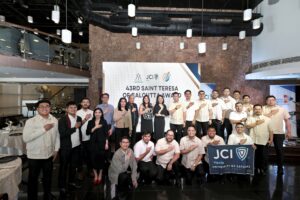
For Dir. Rocky Cebrero, that is the challenge of Special Projects and Government Affairs: to turn access into action, relationships into partnerships, and partnerships into lasting impact.
And perhaps the real measure of the directorate’s work will not be found in the meetings it held this year, but in the projects that continue because those doors were opened.
SEO by SEO-Hacker. Optimized and maintained by Sigil
© 2026 Asian Pearl. JCI Manila Official Publication. All Rights Reserved.