When TIME Magazine released its list of the World’s Greatest Places of 2026, Kaway’an EcoPark found itself alongside some of the most remarkable destinations across the globe.
Among those featured were luxury retreats in Bhutan, China, and South Africa, the Mandarin Oriental Bangkok, and destinations spanning continents from Patagonia to Norway. Yet among these internationally celebrated places was a bamboo eco-park in General Trias, Cavite.
For many Filipinos, the recognition was unexpected.
For JCI Manila member Ar. Christian Salandanan, it was the continuation of a journey that began long before Kaway’an EcoPark existed.
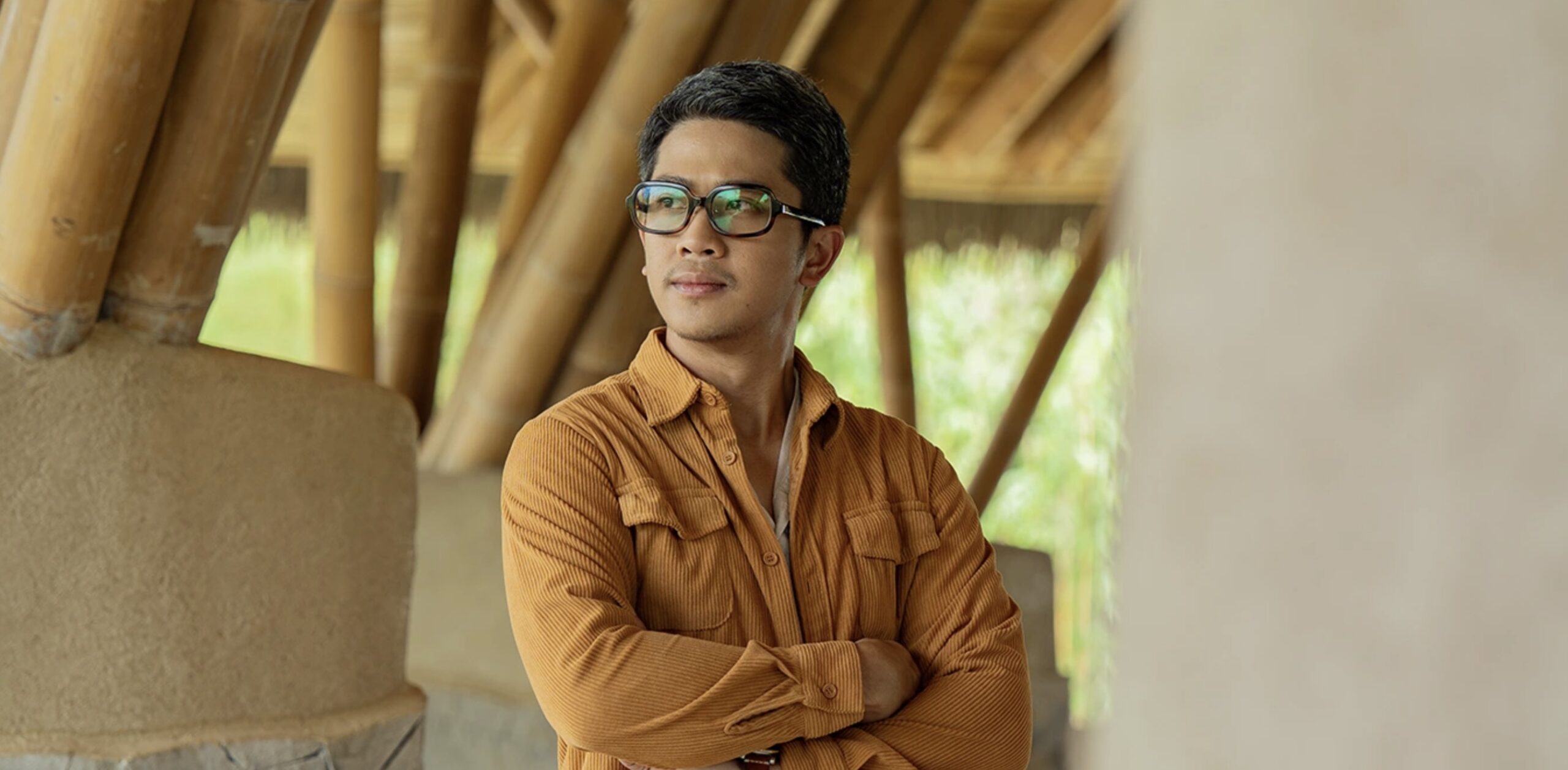
Ar. Christian Salandanan. Photo courtesy of BluPrint, an One Mega Group publication.
For this writer, that journey is especially meaningful to witness.
Ar. Christian was my senior schoolmate at Don Bosco Technical College. Even then, there was already a clear fascination with architecture, design, and the built environment. While many students were still discovering their interests, he seemed to have already found his calling.
That was perhaps not surprising. Don Bosco’s technical education program goes beyond traditional academics, requiring students to complete specialized technical courses and graduate with both a high school diploma and a technical diploma. Ar. Christian took Drafting and Industrial Design, a specialization that exposed students to technical drawing, visualization, design principles, and subjects closely related to the foundational courses encountered in architecture school.
That passion only deepened when he entered the University of Santo Tomas.
As an architecture student, Ar. Christian explored bamboo not simply as a traditional building material but as a serious architectural solution. At a time when bamboo was still largely associated with temporary structures and rural construction, his thesis on bamboo architecture earned recognition in Germany. Long before sustainability became a dominant topic in architecture, he was already asking how local materials could be used to create buildings that were both environmentally responsible and architecturally significant.
Looking back, what stands out is the consistency of that vision.
The questions he was asking as a student continue to shape much of his work today. How can architecture respond more effectively to the Philippine climate? How can buildings become more sustainable without sacrificing beauty or functionality? And how can local materials be elevated beyond the limitations often imposed by perception?

Kaway’an Ecopark. Photos sourced from the Kaway’an Ecopark website.

Kaway’an Ecopark. Photos sourced from the Kaway’an Ecopark website.
Those questions would eventually find one of their most ambitious expressions in Kaway’an EcoPark.
Developed by entrepreneur Rosie Tsai in collaboration with internationally renowned bamboo designer Elora Hardy, Bamboo Pure founder Orin Hardy, Atelier One, and Sangay Architects, Kaway’an EcoPark was conceived as more than a destination. It was envisioned as a family-friendly farm, learning center, and architectural showcase where visitors could experience bamboo architecture on a scale rarely seen in the Philippines.
For Ar. Christian and fellow Sangay Architects principal Kath Sapungay, the project presented both a design challenge and an opportunity.

For generations, bamboo has occupied a complicated place in the Filipino imagination. It is abundant, sustainable, and remarkably strong, yet it is often viewed as inferior to concrete, steel, or imported materials. The ambition behind Kaway’an EcoPark was not simply to construct a bamboo pavilion. It was to demonstrate what bamboo could become when approached with the same rigor, engineering, and creativity applied to any world-class architectural project.
At the center of the property stands the Grand Pavilion, one of the largest bamboo structures in Luzon. Its sweeping roofline, forest-like bamboo columns, and open-air spaces immediately capture attention. Yet behind its graceful appearance lies a highly engineered structure designed to withstand the realities of the Philippine environment.

Kaway’an Ecopark. Photos sourced from the Kaway’an Ecopark website.
“The Philippines is the windiest place on the planet, and bamboo is the lightest material on the planet.”
To address those conditions, the design team paired bamboo with steel. Rather than treating the materials as competitors, they allowed each to perform according to its strengths.
That decision reflects one of Ar. Christian’s long-standing design principles.
“If we will use steel, let’s use steel as steel. If we will use bamboo, let’s use bamboo as bamboo.”
The result is a building that feels organic without pretending to be purely natural. The steel structure provides stability and protection against extreme weather, while the bamboo gives warmth, texture, and character. Together, they create a space that feels both contemporary and deeply connected to its surroundings.
For Ar. Christian, however, the larger goal extends beyond architecture.
“We want to create an example that we can use bamboo here in the Philippines with the right process, the right design, and the right acceptance of the material. We want to set an example that bamboo is not temporary.”
That idea is central to understanding Kaway’an EcoPark.
For years, architects and sustainability advocates have spoken about bamboo’s potential. Kaway’an EcoPark allows people to see that potential realized. Visitors spend time beneath the pavilion, walk through the grounds, cross the Marajuyo Bridge, and experience firsthand how bamboo can shape space in ways that are both functional and inspiring.
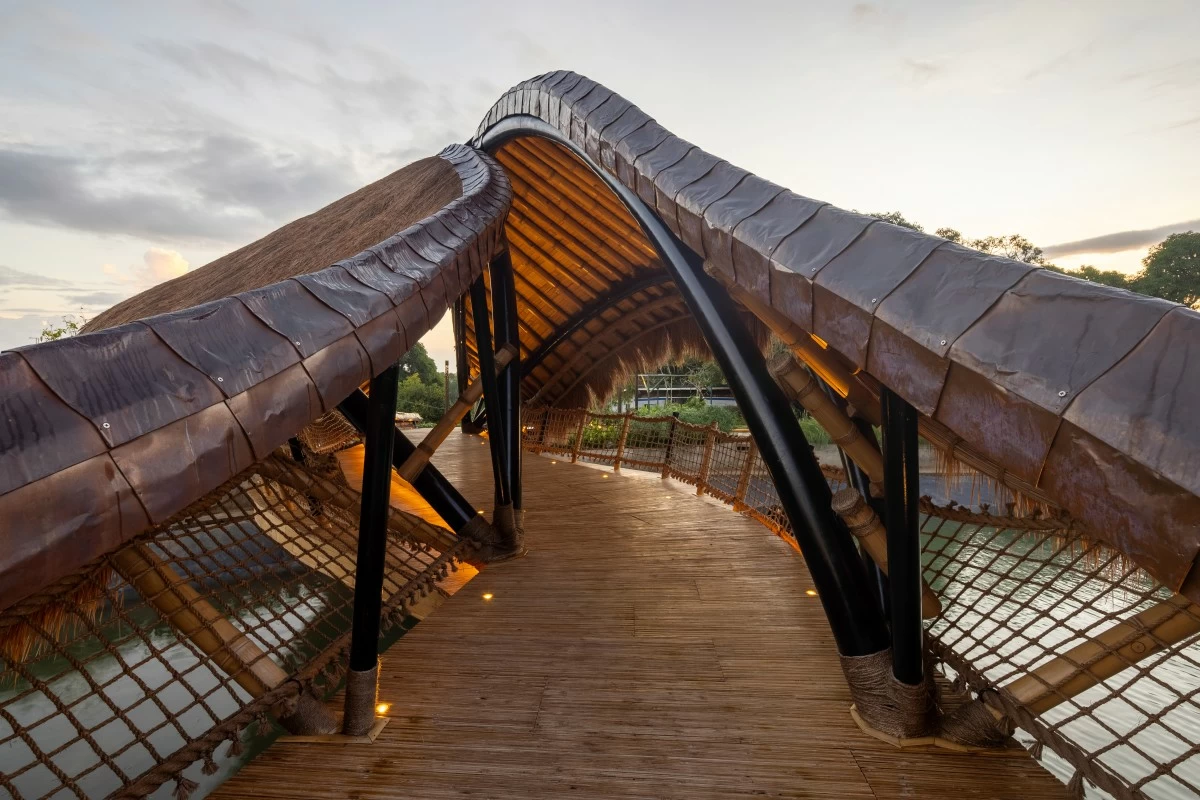
Kaway’an Ecopark. Photos sourced from the Kaway’an Ecopark website.
“It’s showing people the end product. Letting them see. Letting them experience how a space with bamboo feels.”
The project’s significance extends beyond design.
Throughout construction, local builders worked alongside Balinese artisans, engineers, craftsmen, and international consultants. The process became an exchange of knowledge and techniques, demonstrating how collaboration across cultures can produce something neither side could have achieved alone.
Ar. Christian has also emphasized that the future of bamboo depends on more than architects and designers.
“Architecture and construction is just one part.”
Behind every successful bamboo project are growers, treatment facilities, suppliers, craftsmen, entrepreneurs, and communities. In that sense, projects like Kaway’an EcoPark contribute not only to architecture but also to the broader development of a sustainable industry.
Kaway’an Ecopark. Photos sourced from the Kaway’an Ecopark website.
This is perhaps why the TIME Magazine recognition feels particularly meaningful.
The inclusion of Kaway’an EcoPark among the World’s Greatest Places of 2026 is certainly a recognition of outstanding design. But it is also recognition of a larger effort to rethink how local materials are perceived and how architecture can respond to the realities of place, climate, and culture.
For Ar. Christian, it represents a milestone in a journey that began years ago in a classroom at UST, when bamboo was still considered an unconventional subject for serious architectural study.
Today, one of the projects he helped bring to life stands alongside some of the world’s most celebrated destinations.
For those who have followed his journey, the recognition feels less like a surprise and more like the natural outcome of a belief he has carried for decades: that Filipino materials, Filipino craftsmanship, and Filipino ideas deserve a place on the world stage.
SEO by SEO-Hacker. Optimized and maintained by Sigil
© 2026 Asian Pearl. JCI Manila Official Publication. All Rights Reserved.