BAGUIO CITY, Philippines — In a city celebrated for its progress and urban development, JCI Manila set out to ensure that one of Baguio’s greatest treasures would never be left behind: the rich heritage of its Indigenous Peoples.
Through Project Roots to Rise, JCI Manila partnered with Pinget National High School, the Department of Education, and leaders from various Indigenous communities to create a dedicated learning facility that preserves, celebrates, and promotes the history, traditions, and identity of Benguet’s Indigenous Peoples.
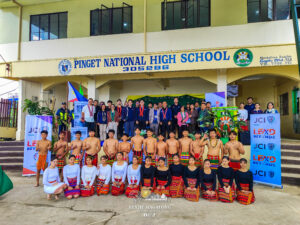
Formerly the capital of Benguet, Baguio has long been recognized as a cultural melting pot. Yet as modernization continues to shape the city, many Indigenous communities face the challenge of keeping their traditions alive amid rapid urbanization. Recognizing this reality, JCI Manila worked closely with education stakeholders and community representatives to identify the educational needs of students and develop a project that would leave a lasting impact.
At the heart of the initiative is Pinget National High School, where approximately 90 percent of the student population belongs to Indigenous communities. Rather than simply providing infrastructure, the project sought to strengthen cultural identity by creating a space where students can deepen their appreciation of their heritage while supporting the implementation of the Department of Education’s Indigenous Peoples Education (IPED) Curriculum.
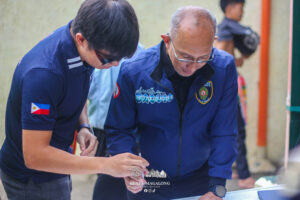
For JCI Manila, preserving culture goes beyond protecting artifacts or documenting history. It means ensuring that stories, traditions, languages, and values continue to be passed from one generation to the next. The organization believes that while modernization is essential to national progress, it should never come at the expense of cultural identity.
The initiative was spearheaded by Project Chairman Charles Ramento, together with his dedicated committee composed of Sherdil Rana, Willard Ong, Gerard Castor, and Migo Fajatin. Their months of planning, coordination, and collaboration with local stakeholders transformed an ambitious vision into a meaningful legacy for the Indigenous youth of Benguet.
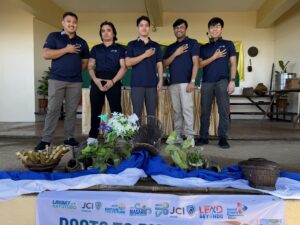
Building the learning facility required careful planning and continuous coordination with school officials, the Department of Education, and Indigenous community representatives to ensure the project remained culturally respectful and responsive to the needs of its beneficiaries. Located more than 240 kilometers from Metro Manila, Pinget National High School required multiple site visits to oversee construction and coordinate with local partners. Conflicting schedules among project members meant volunteers often traveled in pairs, making the long journey to monitor progress and ensure that every phase of construction met the project’s objectives. Even transporting materials proved demanding, as the steep roads leading to the school tested both logistics and determination.
The project’s turnover ceremony brought together education leaders, government officials, law enforcement representatives, community stakeholders, and JCI Manila members in a shared commitment to preserving the cultural heritage of Benguet. Among those in attendance were Hon. Mauricio G. Domogan of the IPED Consultative Advisory Body (CAB), Baguio City Mayor Hon. Benjamin B. Magalong, Baguio City Councilor Hon. Vladimir D. Cayabas, and Baguio City Police Office Director PCOL Ruel D. Tagel.
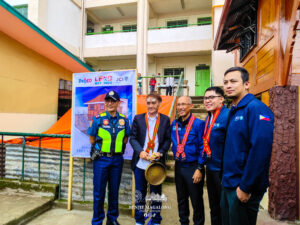
Representing JCI Manila were Executive Vice President Matt Flores, Vice President for Community Affairs Francis Deo, Vice President for Internal Affairs Cheeno Olayres, Director for Special Projects Rocky Cebrero, Commissioner Symon Tash Ancha, and Commissioner Ram Gutierrez, whose presence underscored the organization’s commitment to inclusive education and cultural preservation.
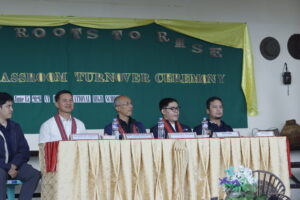
Although many site visits took place during the students’ school break, the turnover ceremony provided the opportunity to meet the project’s beneficiaries. Students, teachers, and community members expressed their gratitude for the initiative and the opportunities it would create for future generations.
Among them was Diane, a graduating student of Pinget National High School, who shared that while she would soon leave the school, she found comfort in knowing that future students would have a dedicated space to learn about the history, traditions, and cultural identity of their ancestors. Her words reminded the project team that every meeting, every long drive, and every challenge had been worthwhile.
The project also highlights the vital role of education in empowering Indigenous communities. While the Philippines has established policies such as the IPED Curriculum to promote Indigenous education, limited resources often make implementation difficult. By providing a dedicated learning facility, JCI Manila hopes to strengthen the delivery of culturally relevant education and equip educators with a space where Indigenous knowledge can be preserved and shared for generations to come.
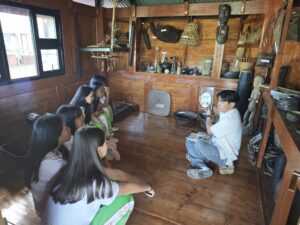
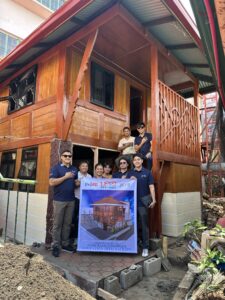
Roots to Rise stands as a testament to JCI Manila’s belief that sustainable development is not measured solely by new buildings or expanding cities, but also by how well communities protect the identities that make them unique.
As Baguio continues to grow, so too must the commitment to preserve the voices, stories, and traditions of the Indigenous Peoples who have shaped its history for generations.
Because when young people know their roots, they are empowered to rise.
SEO by SEO-Hacker. Optimized and maintained by Sigil
© 2026 Asian Pearl. JCI Manila Official Publication. All Rights Reserved.