An accidental Executive Treasurer, an army of self-proclaimed EverGotescans, and the curious case of a man who has convinced almost everyone he could lead JCI Manila except… apparently, himself.
Dan Michael Gallego | The Asian Pearl
I had known of Joshua Rueben Aragon long before I ever met him.
Back when I was still in college, his name was already making the rounds in business, technology, and startup circles. He was six years older than me and, by then, already an established figure in his field.
I didn’t know him personally. We hadn’t met, much less exchanged a conversation. I simply knew who he was because he was popular.
I figured he must have had excellent public relations. Then again, good PR was probably a prerequisite for someone who helped pioneer online grocery shopping in the Philippines through Pushkart.ph.

Before most Filipinos had developed the habit of ordering groceries online, Josh was already building a business around the idea.
And he wasn’t just some guy with a promising app and an impressive pitch deck.
A manufacturing engineer with an Executive MBA from the Asian Institute of Management, Josh had already made his mark in technology and entrepreneurship. His early venture, Lapatronix, developed a minimally invasive surgical tool that won gold at the Intel-DST Asia Pacific Challenge in Bangalore, India, before competing at the Intel Global Challenge at the University of California, Berkeley.
Then came Pushkart.ph, which earned recognition in several startup competitions, including Techtonic, the YES! Startup Summit, ASEAN50 Slingshot, and the ASEAN RiceBowl Startup Awards.
Later, he founded Zagana, a farm-to-kitchen platform connecting Filipino farmers and food suppliers directly to consumers, combining food security, logistics, technology, and sustainability.
He could move between the boardroom and the manufacturing floor, speak the language of investors and engineers, and build businesses around problems most people simply learned to live with.
In the tech, innovation, startup, and sustainability communities, Joshua Aragon was already somebody.
Which makes his journey in JCI Manila rather amusing.
From Startup Celebrity to Reluctant Jaycee
For all his accomplishments outside the chapter, Josh was hardly the sort of member whose calendar revolved around JCI Manila.
He wasn’t particularly active. He was content with one chairmanship a year, doing his part without necessarily aspiring to anything grander.
He wasn’t aggressively climbing the organizational ladder. He wasn’t building a political machinery. And he certainly wasn’t behaving like someone who had a long-term plan to become president.
Then Executive Vice President Eikon Javaluyas came along.
Under the Built Different administration of 2025 President Jan Adrian Padiernos, Eikon helped draw Josh into a much bigger role: Director for Special Projects.

That was when things started getting interesting.
Josh suddenly found himself overseeing one of the chapter’s most diverse and ambitious portfolios. More importantly, he found himself responsible for bringing together people who weren’t necessarily established Jaycees, helping them discover what meaningful participation in JCI Manila could look like.
And something happened that arguably matters more than any project accomplishment.
He built a following.
The Rise of the EverGotescans
Somewhere along the way, Josh’s Special Projects team adopted a rather peculiar identity.
They called themselves the EverGotescans.
The name was a playful reference to Josh’s family heritage. He is a direct descendant of Go Tong, the tycoon behind the once-dominant Ever Gotesco business empire, whose malls and commercial establishments were fixtures of Philippine retail before the Asian Financial Crisis changed the landscape.
It is not every day that a JCI Manila director accidentally inspires a fan club named after a retail empire.
But the EverGotescans were more than a running joke.
They were a community of members who found purpose, camaraderie, and belonging under Josh’s leadership. Many became fully inducted members after taking part in projects where they were given meaningful responsibilities rather than ceremonial assignments.
His 2025 Special Projects Directorate activated 42 new members, raised approximately ₱20 million, and delivered projects valued at approximately ₱30 million.

As previously chronicled in The Year SpecPro Became JCI Manila’s Framework for Sustainable Projects, Replicable Models, and Generational Reach, the directorate emphasized partnerships, long-term sustainability, and projects that other communities and institutions could replicate.
Josh became affectionately known as Mister MOA Signing for his seemingly endless partnership meetings. What initially appeared to be an obsession with paperwork eventually produced a formidable network of partners and a pipeline of projects extending beyond his term.
But perhaps the more revealing measure of his leadership had nothing to do with awards, project values, or signed agreements.


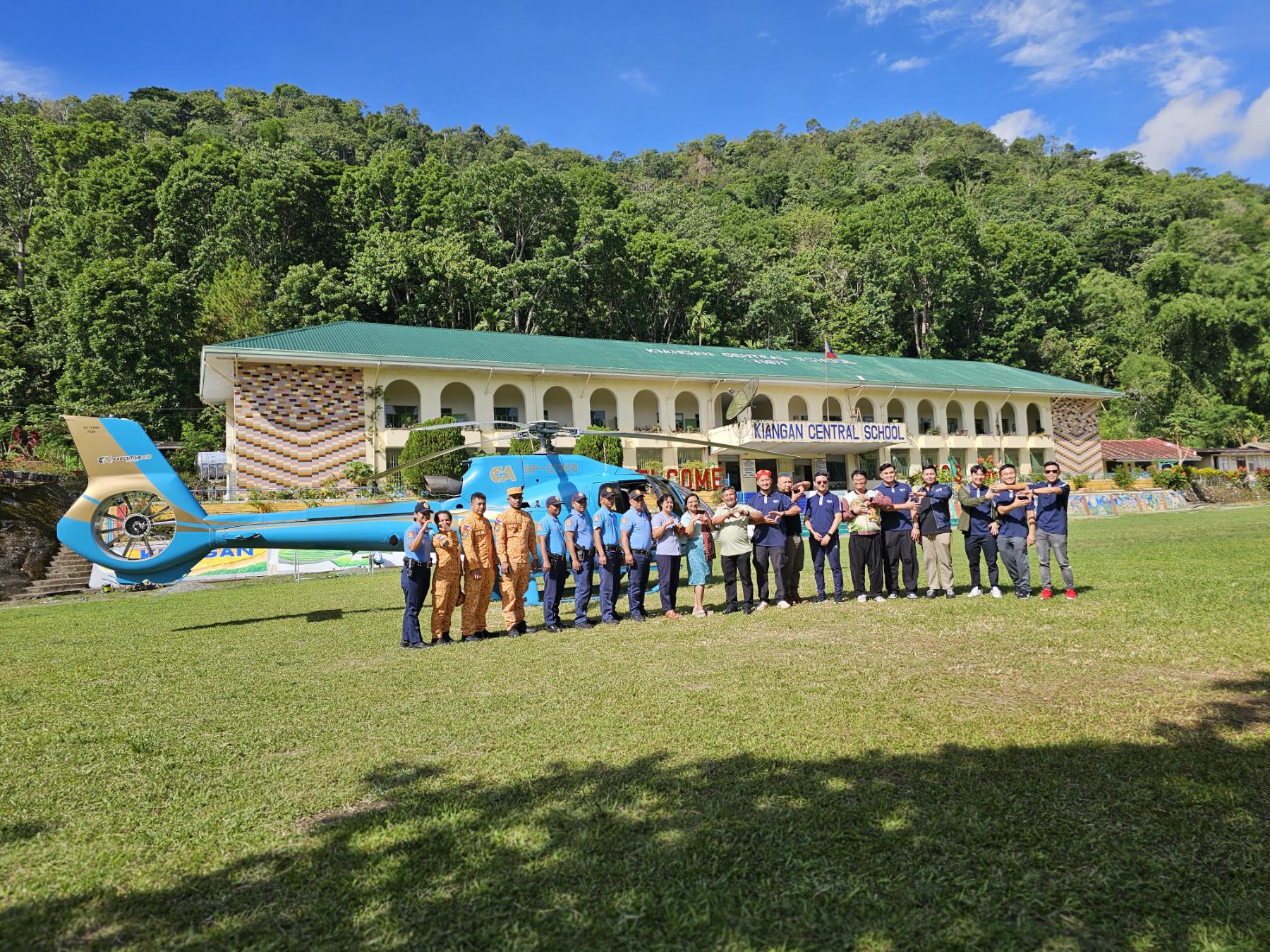
JCI Manila President Jan Adrian “AP” Padiernos, the JCI Manila Committee, and members of the Kiangan community gather at Kiangan Elementary School in Ifugao. Trivia: The school once served as the incarceration site of General Tomoyuki Yamashita during his final days before execution in 1946.It happened at a party.
Toward the end of 2025, approximately 50 members of his Special Projects team organized a surprise year-end celebration and an advance birthday treat for him.
To lure Josh to the venue, the conspirators invented a meeting with an officer from the Asian Development Bank.
And Josh, being Josh, showed up.
There was food, there were gifts, and naturally, there were after-party drinks. The entire celebration was shouldered by the very members he had helped bring into the organization.
Anyone familiar with JCI Manila knows how unusual that arrangement can be. More often than not, it is the director who treats his members, picks up the tab, and generously subsidizes the fun.
In Josh’s case, his members decided it was their turn.
You can buy a dinner. You can sponsor an event. You can even build a successful directorate through sheer organizational competence.
But inspiring 50 people to spend their own money throwing you a surprise party?
That is a rather different kind of accomplishment.
And perhaps a more difficult one to manufacture.
The Executive Treasurer Who Wasn’t Supposed to Be Executive Treasurer
If his appointment as Special Projects Director seemed unlikely, his journey to JCI Manila’s Executive Committee was even less deliberate.
Josh wasn’t originally the first choice for Executive Treasurer of the 2026 Lead Beyond Board under President Edison Ke.
He entered the picture when another prospective candidate did not qualify to run for the position.
In other words, he wasn’t exactly campaigning for the job. He was the alternative.
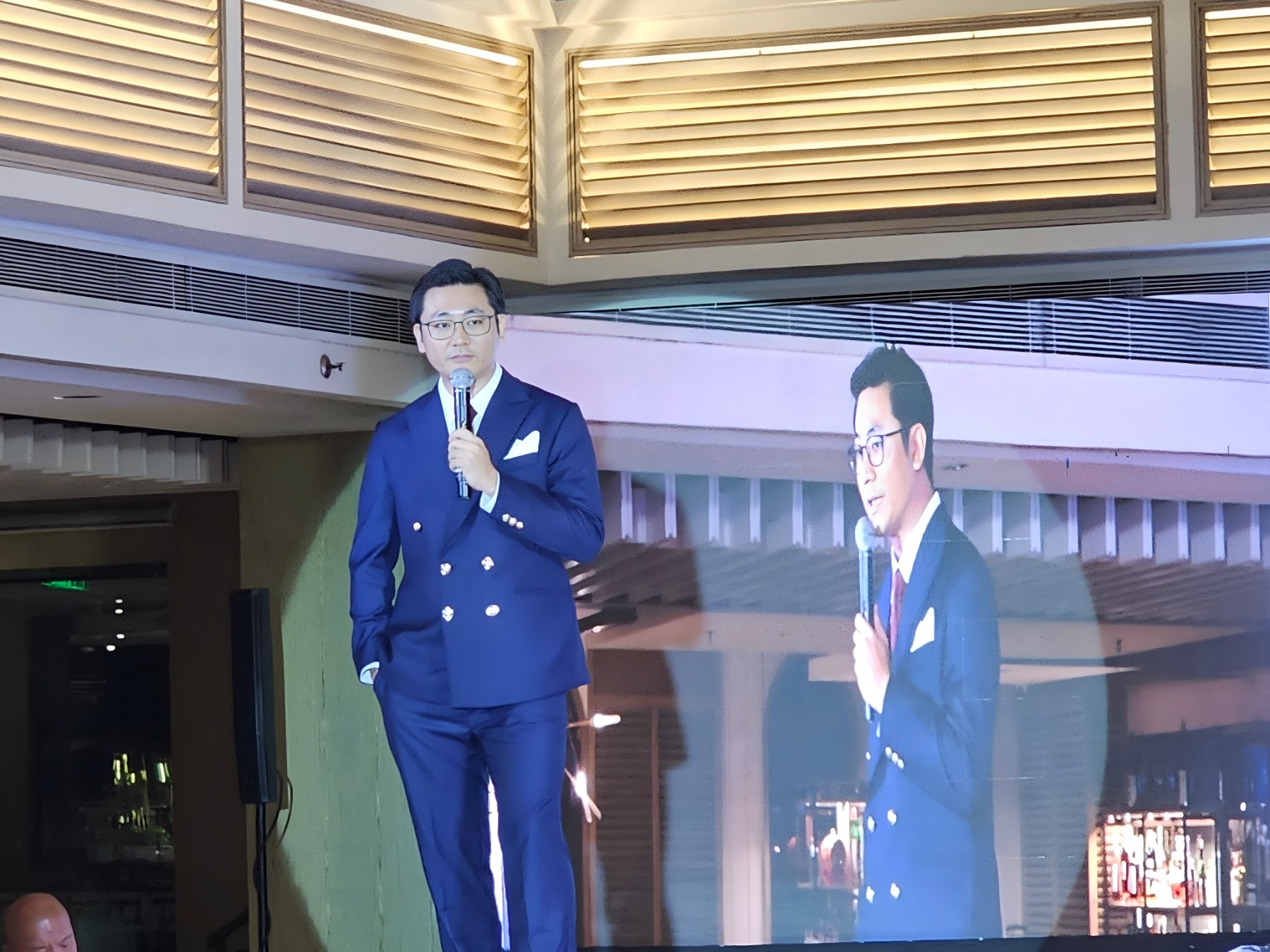
He hadn’t spent months preparing for it. He didn’t have a meticulously crafted plan to become an ExeCom officer.
But when the opportunity arrived, he accepted.
“I’m not sure when I’ll become part of the board again, or if I’ll even ever become part of the ExeCom,” he told me.
It was a refreshingly practical explanation from someone who had suddenly found himself entrusted with one of the chapter’s most consequential executive positions.
Rather than pretend he knew everything, Josh began by talking extensively with his predecessors.
He wanted to understand their practices, study the systems already in place, appreciate the responsibilities of the office, and identify what could be improved.
“I didn’t change much in the system, format and templates. I just built on top of them to ensure they’re responsive and useful to present needs and issues,” he explained.
That sounds almost disappointingly sensible.
Especially coming from somebody whose professional background involves launching startups, transforming business models, and finding creative solutions to complicated problems.
The Executive Treasurer’s portfolio is less adventurous than Special Projects. It deals heavily with finance, compliance, institutional processes, and governance. It demands discipline, accuracy, continuity, and the occasional willingness to be the person who tells everyone else why something cannot simply be charged to the chapter.
It also comes with the broader responsibilities of an Executive Committee officer, including ceremonial duties and occasionally stepping in for the Secretary-General.
I kept pushing Josh to tell me what groundbreaking innovation he had introduced.
Surely there must have been something.
A revolutionary financial reporting platform? A radical new governance system? An algorithm that could finally make every Jaycee submit reimbursements correctly and on time?
“Not much breakthroughs. I just do what an ET is supposed to do,” he replied.
And that was pretty much the end of his sales pitch.
Except it wasn’t entirely true.
Josh had also gathered and analyzed membership data, identifying patterns, trends, and possible future scenarios that could help JCI Manila understand its membership more intelligently.

It was precisely the kind of strategic foresight that could inform recruitment, retention, activation, and long-term institutional planning.
He didn’t appear particularly eager to take credit for it.
Perhaps he had simply forgotten about it. Or perhaps, to him, this was merely another thing that needed doing.
But there is something worth examining in that attitude.
Must leadership always produce something spectacular to be considered effective? Or can leadership also mean making existing systems work better, preserving institutional knowledge, and leaving an organization more capable than when you found it?
The entrepreneur in Josh knows how to build new things.
The Executive Treasurer appears to be learning the equally important art of making things last.
A Following He Never Asked For
For two consecutive years, Josh has served on the JCI Manila Board while maintaining major responsibilities beyond the chapter, including involvement with the Philippine Red Cross in Quezon City and the Rotary Club of Manila.
Business. Family. Multiple civic organizations. JCI Manila.
Apparently, the man’s idea of a manageable workload is somewhat different from the rest of ours.
And yet, despite these commitments, there is a growing sentiment among members that Josh should consider something bigger.
The JCI Manila presidency.
“He is the kind of person you want to support and bring to the top, with his humble character, capable personality,” says Commissioner Jake Lagazo, who was already regarded as a promising Baby Jaycee while serving under Josh’s Special Projects Directorate.
Jake isn’t alone.
“Many of us like Joshua Aragon. He’s highly capable and he has an amazing pedigree. If he wants to be president, I’ll throw my support to him,” a senior past president told me.
We are keeping this past president anonymous, partly because this is a personality feature and not an election endorsement.
But the sentiment is revealing.


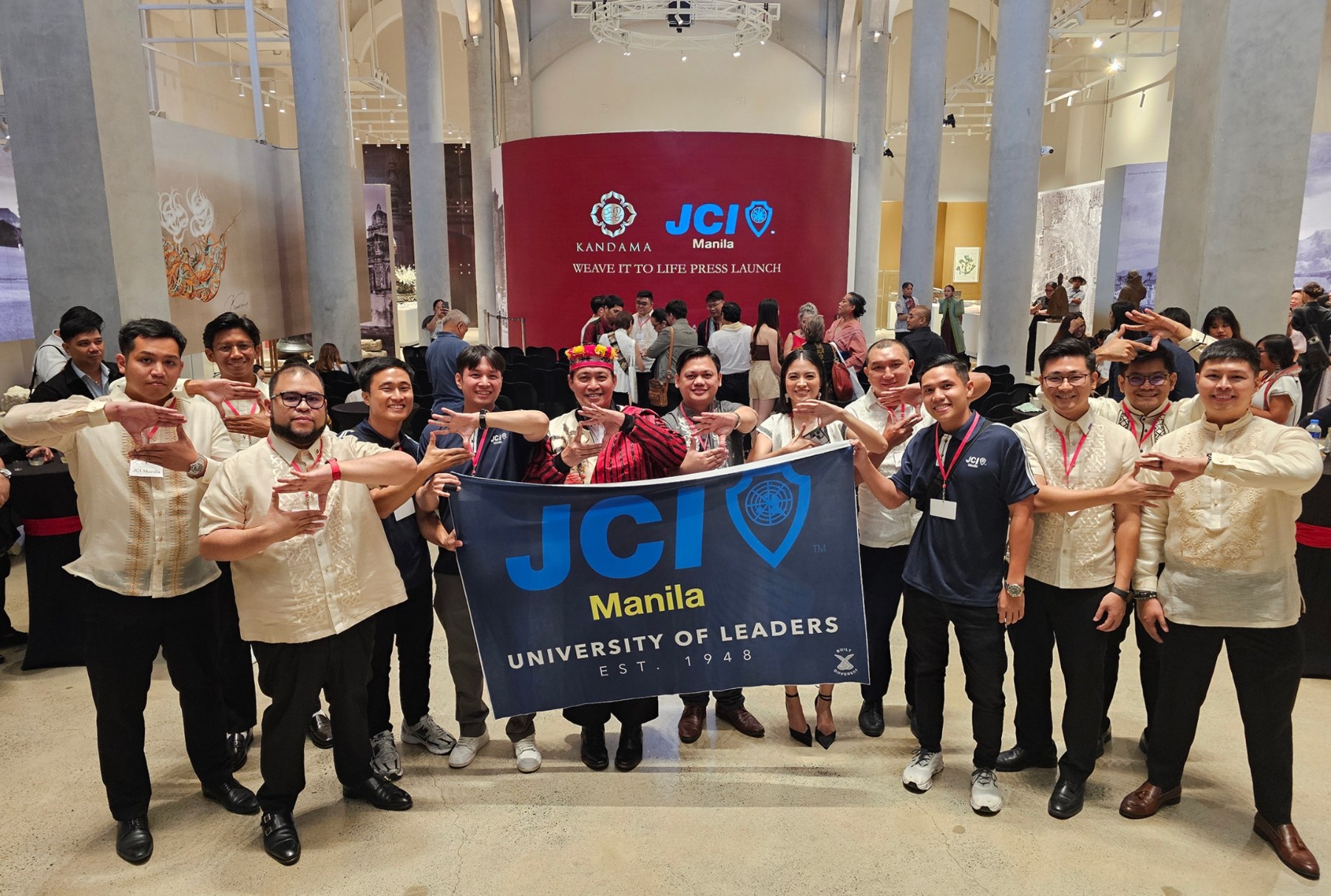
Josh seems to possess something that political aspirants often spend years trying to cultivate: goodwill that arrives without aggressive solicitation.
His supporters like his competence. They respect his humility. They appreciate his professional achievements and family background.
But I suspect many admire him for a simpler reason.
He doesn’t seem particularly interested in making people admire him.
In an organization filled with exceptionally accomplished individuals, where ambition is rarely in short supply, that can be an oddly attractive quality.
Of course, being well-liked is not the same as being ready to lead an organization as complex and demanding as JCI Manila.
A presidency requires more than credentials, good intentions, and a loyal following. It requires vision, stamina, judgment, sacrifice, and the willingness to make unpopular decisions.
And perhaps that is exactly why Josh’s hesitation deserves to be taken seriously.
Joshy, When Will You Realize?
Among those who see Josh as presidential material, the clock is already ticking.
Some have 2028 in mind as the decisive year, before our “2000s candy cutie” becomes, in the affectionate language of the Gen-Z’s, thoroughly kwarentahin.
But while others talk about presidential possibilities, Josh still appears genuinely uncertain about the kind of leadership he could offer.
It is curious.
This is a man who has built businesses, earned recognition internationally, led high-performing teams, transformed a JCI Manila directorate, and handled the chapter’s executive financial responsibilities.
And yet, when the conversation turns to becoming president, he sounds almost as though somebody has confused him with another Joshua Aragon.
He also has an inconvenient complication.
A family.
His father wants him to prioritize the family businesses.
His wife wants him to prioritize her.
I mean, their family.
Which, to be fair, is a rather compelling argument.
The presidency of JCI Manila is no casual weekend commitment. It demands time, energy, money, relationships, and sometimes an extraordinary tolerance for meetings that could have been emails.
Josh knows this.
And unlike the people enthusiastically volunteering him for greater responsibility, he would be the one who actually has to live with the consequences of saying yes.
That raises a question more important than whether Joshua Aragon can become president.
Should every capable leader be expected to pursue the highest office available to him?
We often assume that leadership is a ladder. That each successful chairmanship should lead to a directorship, each directorship to an executive position, and each executive position ultimately to the presidency.
But perhaps leadership isn’t necessarily about ascending.
Perhaps it is also about knowing what one is willing to give, what one hopes to accomplish, and whether the responsibility ahead is genuinely worth the sacrifices it requires.
Josh’s reluctance might be a failure to recognize his own potential.
Or it might be the sober judgment of a man who understands that a title should never become more important than the responsibilities attached to it.
Either way, his story presents an interesting irony.
He once built a grocery platform to make people’s lives more convenient. He built a farm-to-kitchen enterprise to improve food distribution. He built a Special Projects team that made dozens of members feel they belonged.
And now, an increasing number of people appear determined to build something around him.
A possible presidency.
The question is whether Josh wants it as much as they do.
Because the same members who once invented a meeting with an ADB officer to lure him into a surprise birthday party might one day be organizing an entirely different kind of surprise.
An election campaign.
And this time, they might not have to invent a reason for him to show up.
Joshy, your peeps seem to see the leader you could become.
When will you realize it yourself
SEO by SEO-Hacker. Optimized and maintained by Sigil
© 2026 Asian Pearl. JCI Manila Official Publication. All Rights Reserved.