A presidency is measured not only by the projects delivered within a year, but by the people inspired, partnerships strengthened, and legacy built for the generations that follow.
When Edison “Eds” Ke accepted the presidency of JCI Manila for 2026, he inherited more than a leadership position. He inherited a chapter with a proud history, a large and diverse membership, a demanding calendar of community initiatives, and an extraordinary responsibility: helping bring the JCI World Congress back to the Philippines after 28 years.
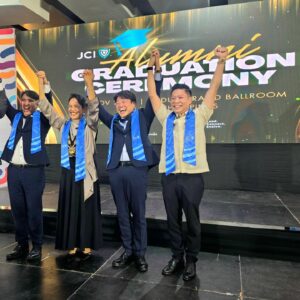
His answer to that challenge was captured in two words: LEAD BEYOND.
For Eds, the theme represented more than a slogan for the year. It called on members to move beyond what was expected, beyond existing limitations, and beyond the achievements of previous generations. It was a challenge to build an organization that could remain strong at home while confidently representing the Philippines on the international stage.
A Vision Bigger Than a Presidential Term
Before assuming office, Eds presented an ambitious vision for JCI Manila. His roadmap called for a stronger organization, deeper engagement among members, expanded business and mentorship networks, stronger relationships with sister chapters, and a more visible presence in the global JCI community.
He envisioned more than 400 projects, greater participation from members, stronger national and international partnerships, and a significant Manila delegation at the World Congress. He also emphasized the importance of sustaining JCI Manila’s identity as a premier chapter known for leadership, service, and measurable community impact.
These were ambitious targets, but they reflected his belief that a successful organization should never become comfortable with what it has already accomplished.
His leadership journey within JCI Manila had prepared him for this responsibility. Having served as Membership Wellness Director in 2023 and Vice President in 2024, Eds had experienced different dimensions of chapter leadership, from building fellowship and member engagement to balancing organizational development with the diverse needs of its membership.
His philosophy, described in a 2025 JCI Manila feature as the “KE Principle,” emphasized inclusive leadership. He believed that members should have room to grow through different experiences, whether in community projects, business development, leadership training, sports, or fellowship.

Rather than expecting every member to find fulfillment in the same activities, he wanted to build a chapter that could recognize and develop the individual strengths of its people.
It was a philosophy that would become especially important during a year when the organization needed every available hand, skill, and talent.
LEAD BEYOND in Action
On January 30, 2026, at Okada Manila, JCI Manila formally installed Eds and his Board of Directors during its 78th Induction and Turnover Ceremonies. More than 750 members, partners, leaders, and distinguished guests attended, marking one of the largest delegations in the organization’s induction history.
The ceremony was not simply the beginning of another administration. It marked the start of a year in which JCI Manila would have to balance its regular organizational responsibilities with preparations for one of the most significant international events in its history.
One of the administration’s early achievements was strengthening the chapter’s partnership with ABS-CBN Foundation. Through a renewed Memorandum of Agreement signed in February, JCI Manila expanded its support beyond Bantay Bata 163’s Child Safe Schools initiative to include Programa Genio, which supports persons deprived of liberty through education, and GaLing Pamayanan’s community initiatives in Marikina.
The expanded partnership demonstrated an important direction of the administration: creating collaborations that allow JCI Manila to extend its reach beyond projects implemented independently by the chapter.
Environmental sustainability also became a major area of collaboration through Project Hiraya: Turning Waste into Worth, Creating Futures.
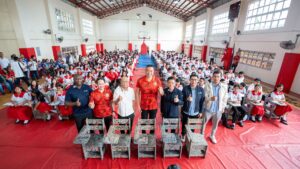
In June, Eds joined MMDA Chairperson Atty. Don Artes in formalizing a partnership between JCI Manila and the Metropolitan Manila Development Authority. The initiative sought to transform plastic waste into useful products, including school furniture for underserved communities, while encouraging responsible waste management and environmental awareness.
The collaboration brought together government institutions, private-sector partners, and JCI Manila members around a practical environmental and social development objective.
Healthcare remained another important priority. Through Care for Life, JCI Manila pursued a comprehensive cancer awareness and intervention programme in Baseco, Manila, and Perpetual Help in Las Piñas. Running from February to August, the initiative brought together medical professionals, civic leaders, and partners to provide awareness, screening, treatment support, and psychosocial assistance.
Eds described LEAD BEYOND as a commitment to ensure that projects go beyond immediate expectations, break existing limitations, and create sustainable solutions for future generations.

The administration also carried forward the chapter’s commitment to education and peacebuilding. In Basilan, JCI Manila supported the establishment of a solar-powered classroom in Sumisip, transforming a former conflict-affected area into a place where children could learn and build a future beyond violence.
Eds captured the heart of the initiative with a memorable statement:
“Yesterday’s battleground, Tomorrow’s classroom.”

The project brought together local government leaders, civic partners, community members, and former combatants who contributed their time and effort toward building a school. It demonstrated how cooperation, education, and community participation can help create opportunities in places where conflict once defined everyday life.
These initiatives were not the work of one person. They were made possible by project chairmen, commissioners, members, volunteers, partner organizations, and communities. Eds’ responsibility as president was to help create the environment in which these people could work together and turn ideas into meaningful action.
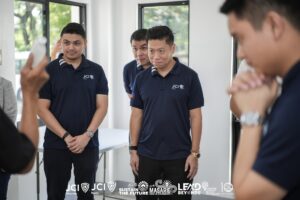
Building a Culture That Recognizes Excellence
Leadership also requires creating an organization that knows how to recognize and celebrate the people who make progress possible.
In March 2026, JCI Manila launched the inaugural Monching Awards, named in honor of Ramon V. del Rosario Sr., affectionately known as Monching, whose legacy helped shape the chapter and the wider JCI movement in the Philippines.
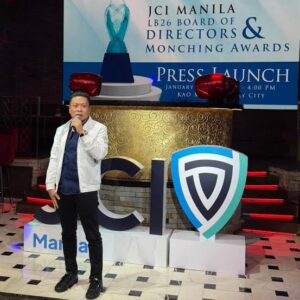
The awards were designed to institutionalize a culture of recognition, celebrating members, projects, and leaders who demonstrate excellence, meaningful impact, innovation, and brotherhood.
For Eds, the initiative represented an opportunity to preserve the chapter’s heritage while encouraging members to pursue even higher standards.
The importance of that commitment became evident at the 2026 JCI Philippines National Convention, where JCI Manila swept all three Best of the Best honors: Local President, Local Organization, and Local Organization Project for Color Fest for Mental Health.
It was a significant recognition for the chapter and the administration’s collective work. More importantly, it demonstrated how organizational excellence is built through the combined contributions of leaders, members, and project teams.
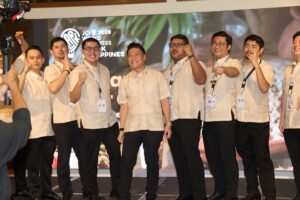
The Responsibility of Hosting the World
Yet even with the demands of its community projects, partnerships, and internal programmes, 2026 carried a responsibility unlike any other.
JCI Manila was part of the Philippine effort to host the JCI World Congress in Clark from November 11 to 15, 2026. The Congress marked the event’s return to the Philippines after 28 years, since the country last hosted it in 1998.

For a local organization president, hosting the World Congress means carrying responsibilities that extend far beyond attending international meetings or welcoming foreign delegates.
It means representing the chapter before national and international leadership, helping mobilize members, supporting fundraising and sponsorship initiatives, building relationships with government and private-sector partners, and ensuring that the local organization remains aligned with the broader national hosting effort.
It also means balancing two demanding roles: leading the chapter’s own annual programme while helping deliver an international event that will reflect on the country and the entire JCI organization.
The distinction between the local chapter president and the World Congress Director is important. Luis Angelo Sevilla served as the 2026 World Congress Director, with responsibility for leading the Congress organizing effort. Eds, as JCI Manila President, represented the local organization and helped ensure that the chapter fulfilled its responsibilities as host.
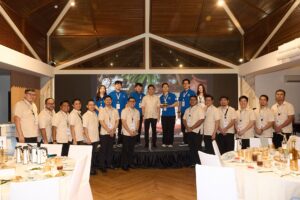
That responsibility required close coordination with fellow JCI organizations, local government units, tourism agencies, hotels, emergency response partners, sponsors, and other stakeholders.
In Mabalacat, Eds joined fellow JCI Manila leaders in presenting the Congress plans to Mayor Gerald Aquino. During the meeting, he invited the mayor to deliver remarks during the World Congress Opening Night. The local government committed support through coordination on security, emergency response, and applicable local taxes.

The delegation also engaged the Philippine Disaster Resilience Foundation, recognizing that an international gathering of thousands of delegates required careful preparation for emergencies and unexpected situations.
At the national level, Eds represented the World Congress Director in the November 9 signing of a Memorandum of Agreement between the Tourism Promotions Board Philippines and JCI Philippines. The partnership was intended to support the country’s hosting of the Congress and strengthen its international tourism and destination-promotion efforts.

These engagements illustrate an important aspect of presidential leadership: the ability to build trust beyond the organization itself. A local chapter cannot successfully host the world through membership alone. It must earn the confidence and cooperation of institutions, businesses, communities, and public officials.
When the World Finally Arrived
From November 11 to 15, Clark became the meeting place of the international JCI community.
Delegates arrived from more than 120 countries, bringing together young leaders, entrepreneurs, professionals, and changemakers for leadership development, international business, cultural exchange, and fellowship.
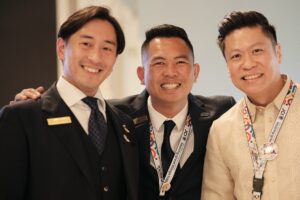
For JCI Manila, the Congress was the culmination of years of preparation and the result of work carried out by countless individuals across the national organization.
The responsibility did not end when delegates arrived. The chapter had to continue supporting the Congress while ensuring that its members, partners, and local stakeholders remained connected to the larger purpose of the event.

The World Congress was not simply a showcase of venues, programmes, and hospitality. It was an opportunity to demonstrate what Filipino leadership, volunteerism, and collaboration could accomplish before the international community.
It also created a lasting moment for JCI Manila. The chapter was able to stand before the world not only as one of the oldest and most established organizations in the JCI network, but as a local organization capable of contributing to an international gathering of extraordinary scale.

Beyond the Event, Beyond the Presidency
As the year draws to a close, Eds’ presidency offers an important reminder about the nature of leadership.
A president does not build an organization alone. He sets a direction, brings people together, encourages collaboration, represents the organization, and accepts responsibility when the demands become difficult.
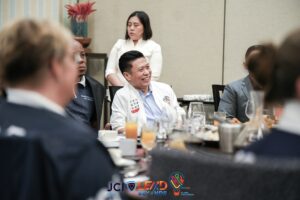
The projects, partnerships, awards, and World Congress preparations are important milestones. But the deeper measure of his leadership lies in whether the people around him have become more capable, whether the organization has grown stronger, and whether the work will continue long after his term ends.
The World Congress may have been the most visible responsibility of the year, but it was never the entirety of the mission. JCI Manila still had communities to serve, members to develop, relationships to strengthen, and future leaders to prepare.
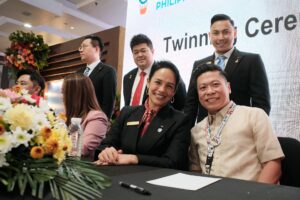
For Eds, LEAD BEYOND was ultimately a call to do more than inherit a legacy. It was a challenge to add to it.
Because the true success of a president is not simply measured by how well he leads during his year in office, but by what he leaves behind for the next generation.
He led beyond expectations. He helped bring the world to our doorstep. And he reminded us that the greatest legacy is built by people who choose to lead together.
SEO by SEO-Hacker. Optimized and maintained by Sigil
© 2026 Asian Pearl. JCI Manila Official Publication. All Rights Reserved.