September 11 started like any other JCI Manila event. Chairs arranged. AV tested. Contingency plans in place. By mid-morning, over 100 professionals had filled the room, most of them walking in with the same question: what is Claude, and why should I care?
By the end of the day, they had the answer. More than that, they had concrete tools they could use Monday morning.
The Applied Artificial Intelligence for Professionals training was built on a simple premise: AI is no longer optional. It’s moving fast, it’s already here, and the window to catch up is closing. Catherine Jalandoni, President of the Global AI Council Philippines and our keynote speaker, opened the program with exactly that message. Her slides walked through the landscape of AI adoption, the gaps countries face in competitiveness, and the risk of being left behind. But the message wasn’t meant to scare. It was meant to motivate. If you’re not learning now, you’re already behind.
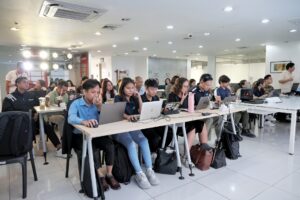
That framing set the tone for everything that followed.
Clarence Santos took that foundation and made it practical. Most people hear “AI” and think of science fiction. Clarence showed them how Claude fits into their actual workflow. He focused on Notion as a second brain, how to organize information the right way, and how to ask Claude better questions. Prompt engineering isn’t complicated. It’s just about being specific. Tell the AI what you’re trying to do. Give it context. Be clear about the output you want. His slides gave attendees frameworks they could copy and paste into their own work that afternoon. The response was immediate. People started seeing how this could save them hours every week.
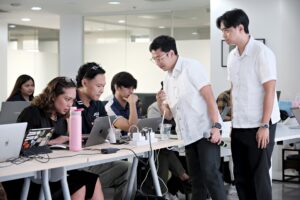
Robin Kwee took it one step further into the applied side. Websites for small businesses. GitHub hosting. But here’s what made Robin’s session stick with people: he didn’t just show them what’s possible. He asked them. What does your company actually need? What’s the bottleneck in your workflow right now? Are you wasting time on repetitive tasks? He took real questions from the room. Real company problems. Real use cases. And he showed them how to build solutions, not in theory, but standing right there with them.
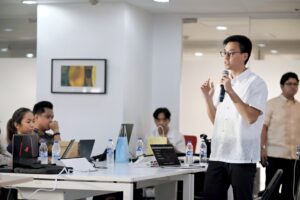
That’s where the training diverged from the typical seminar format. It wasn’t about making people feel inadequate about technology they didn’t understand. It was about showing them that they already have the skills to use these tools. They just needed the framework and a few hours to practice.
The energy in the room shifted as the day went on. Early questions were cautious. By the end, people were trading contact information, sharing ideas about what they’d build when they got back to their offices. One attendee from manufacturing was already thinking about how to use Claude to speed up proposal writing. A service provider was considering how to automate client intake. A manager was taking notes on how to use Notion with his team.
That’s the thing about tools that actually work. People don’t need to be convinced. They just need to see it in action.
The training wouldn’t have happened without collaboration. Catherine Jalandoni brought the authority and the vision. Clarence and Robin brought the technical depth and the practical angle. Aureus Business Institute co-presented because they understood what their audience needed. Our sponsors stepped in because they saw the value. Mark’s Trading & Engineering Services, Designed to Make Perfection, VTG Logistics, New Flavor House. They believed in the mission enough to back it.
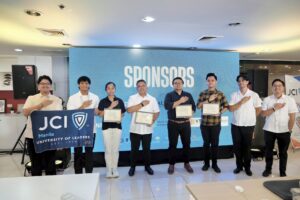
vOffice handled the venue. JET Sound and Lights managed the AV. Madcap Productions handled production. Every piece had to work because the audience knew the difference. When you bring a speaker of Catherine Jalandoni’s caliber and you have 100 professionals in the room, the setup matters. The quality matters. The experience has to match the content.
It did.
At the end of the day, JCI Manila wasn’t just hosting a training. We were creating the conditions for 100 people to upgrade their skills and think differently about their work. Some of them will go back and change how their teams operate. Some will build new services around AI. Some will just save time on tasks that used to take hours. Either way, they’re starting from a different baseline than they were that morning.
The proceeds from the event went directly into JCI Manila’s community development initiatives. Free medical missions. Breast cancer screenings. Youth sports programs. One day of training. Multiple communities affected. That’s the model that works.
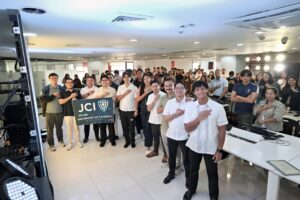
There’s a moment in every successful event when you realize it wasn’t just about the event itself. It was about what happens after. The conversations. The connections. The ideas that take root and grow. We saw that happen on September 11. Over a hundred professionals learned something real. They made connections. They left with tools they could actually use.
That’s not just a successful event. That’s impact.
SEO by SEO-Hacker. Optimized and maintained by Sigil
© 2026 Asian Pearl. JCI Manila Official Publication. All Rights Reserved.