When 6,000 delegates from around the world arrive in Clark for the 2026 World Congress of Junior Chamber International, the impact may extend far beyond leadership sessions, global elections, and international fellowship.
It may also become one of the most economically consequential international conventions hosted in the Philippines in recent years.
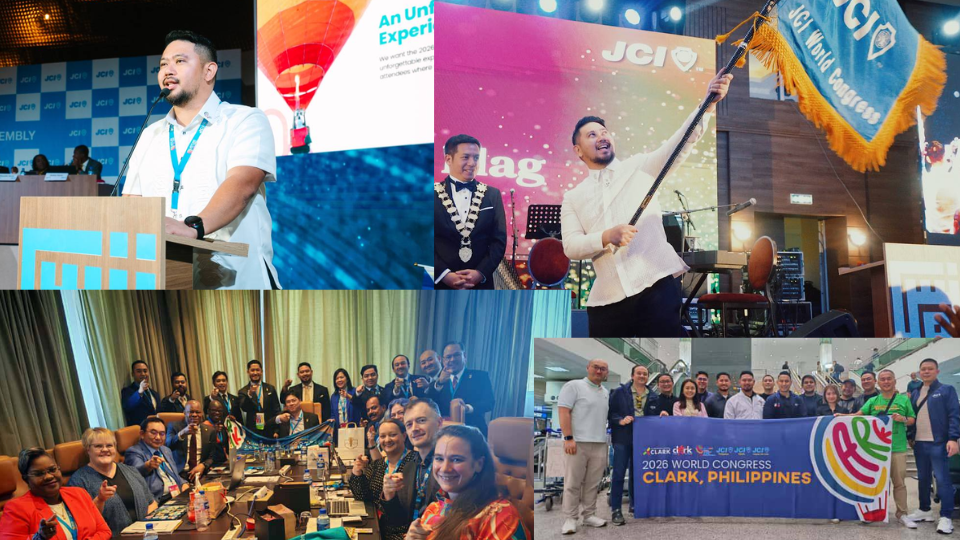
In a recent conversation, Asian Pearl had the opportunity to ask Luis Angelo “Pres. LA” Sevilla, Past President of JCI Manila and Director of the 2026 World Congress, whether the potential economic impact of hosting the event was part of the original consideration when JCI Manila pursued the opportunity to bring the global gathering back to the country.
According to Pres. LA, the motivation at the beginning was not primarily economic.
“The primary motivation was pride,” he explained. The objective was simple but meaningful. Filipino Jaycees wanted to bring the World Congress back to the Philippines and demonstrate the country’s ability to host a global community of young leaders.
The economic dimension came into focus later.
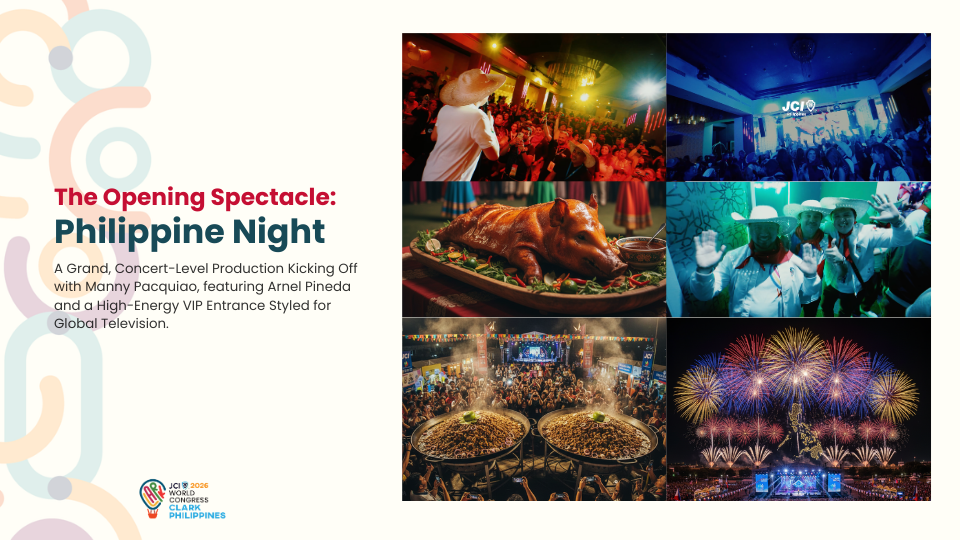
Pres. LA shared that during a meeting with the Tourism Promotions Board, officials presented data from MICECON 2024, the country’s largest gathering of meetings, incentives, conferences, and exhibitions professionals. The presentation highlighted how large-scale international conventions create measurable economic activity across host destinations.
It was during that discussion that the potential magnitude of the World Congress’ economic ripple effect became clearer.
What began as a mission of pride for Filipino Jaycees soon revealed itself to be something larger. The Congress would not only bring global attention to JCI Manila, but could also stimulate tourism, hospitality, transportation, and retail activity across Clark and nearby cities.
A Convention with Global Scale
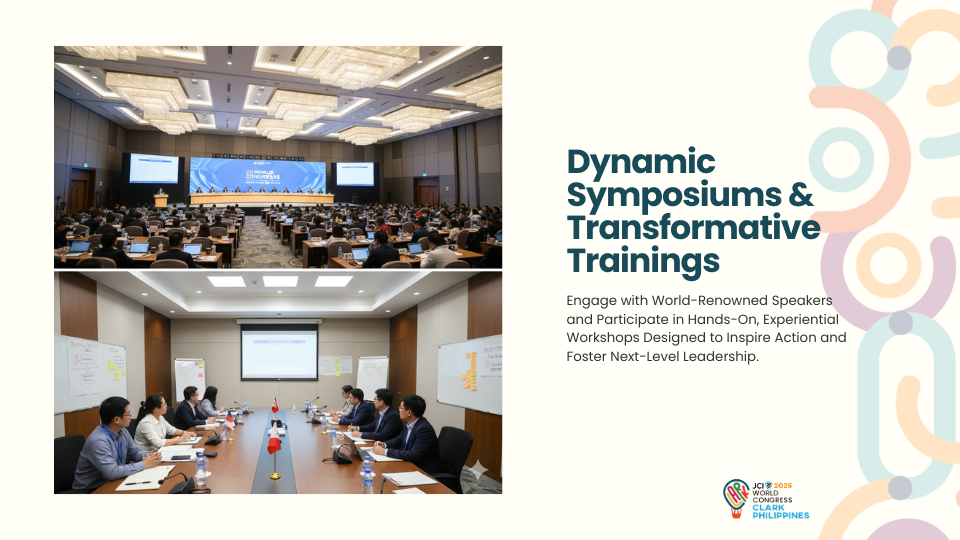
The World Congress is the largest annual gathering of Junior Chamber International members worldwide. Delegates from over 100 countries typically attend to participate in leadership sessions, policy discussions, global elections, training programs, and international networking.
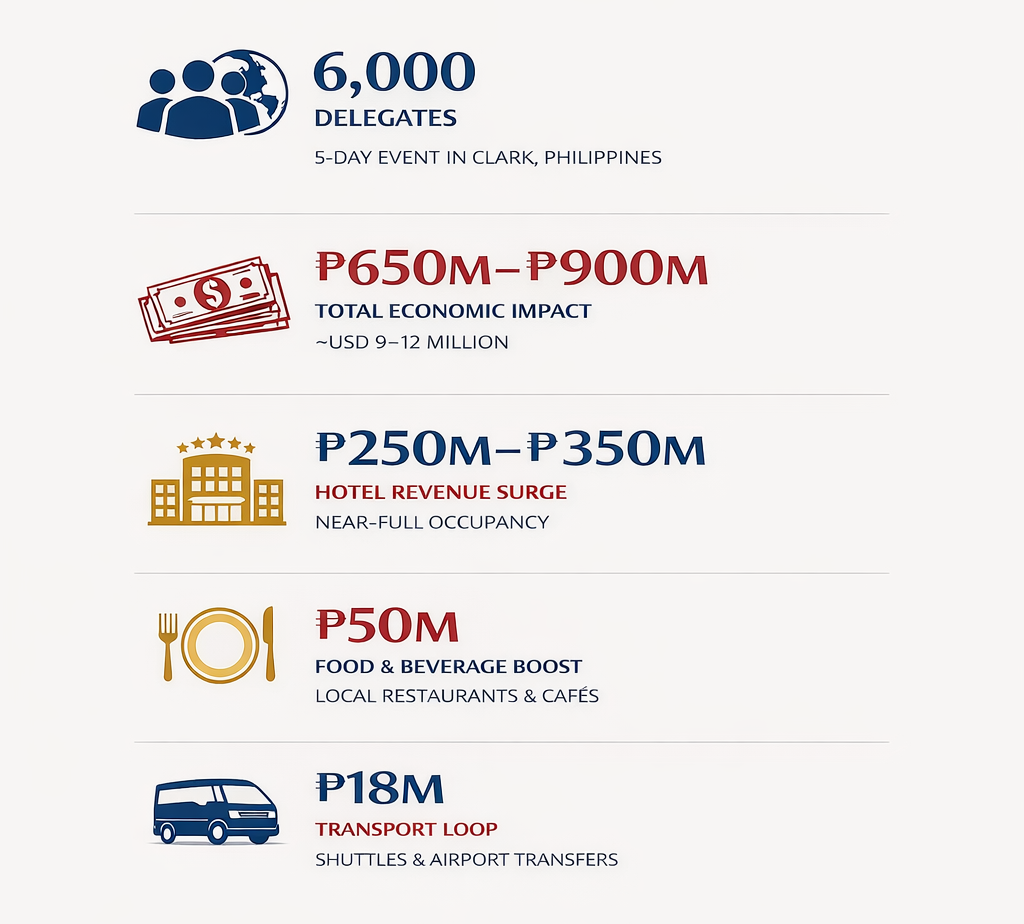
For the 2026 edition, approximately 6,000 delegates are expected to converge in Clark over the course of several days.
Unlike traditional tourism, convention travel tends to generate higher economic value per visitor. Delegates stay in hotels for multiple nights, dine frequently at restaurants, use organized transportation services, purchase souvenirs and local goods, and often extend their trips to explore other destinations within the host country.
For cities that host international conventions, the economic effect can therefore be both immediate and widespread.
Estimating the Economic Impact
Based on conservative projections, the numbers suggest that the Congress could generate significant economic circulation.
If each of the 6,000 delegates spends an average of USD 300 per day over a five-day stay on accommodation, meals, transportation, shopping, and leisure activities, direct delegate spending alone would reach approximately USD 9 million, or roughly ₱500 to ₱550 million.
Should daily spending rise closer to USD 350 to USD 400, which is consistent with international travelers staying in four- and five-star hotels, the figure could climb to ₱600 to ₱700 million.
These estimates focus only on direct spending by delegates.
Additional economic activity comes from the broader ecosystem that supports international conventions. Restaurants, cafés, bars, catering services, retail stores, and local tour operators typically experience a surge in demand during large events.
If delegates spend even ₱1,800 per day outside official Congress meals, more than ₱50 million could flow directly into local food and beverage establishments during the event week.
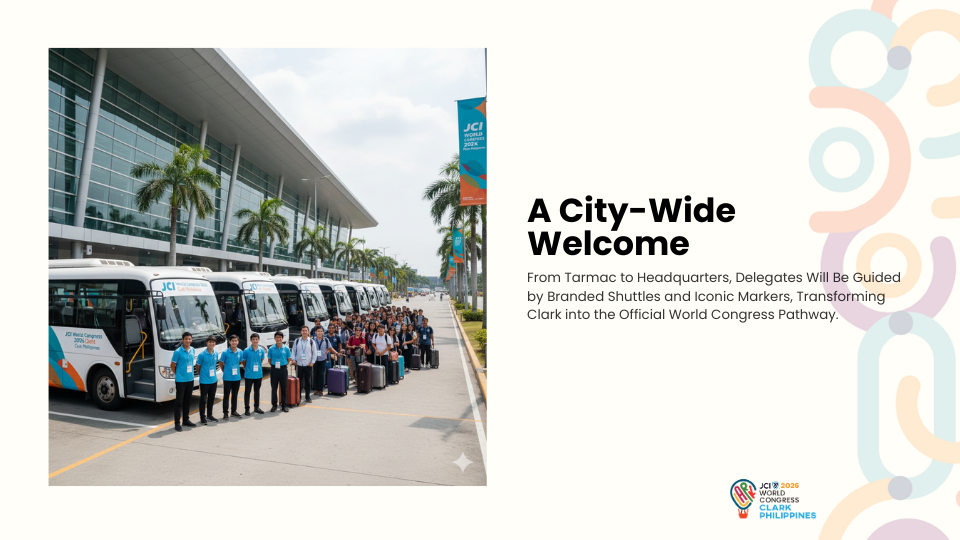
Transportation services are also expected to benefit. Airport transfers, shuttle buses, van rentals, and ride-hailing services will likely be required to support the organized transportation loops that move delegates between hotels, venues, and social events.
The Hospitality Multiplier
Perhaps the most immediate beneficiaries will be Clark’s hospitality sector.
Major hotels such as Clark Marriott Hotel, Hilton Clark Sun Valley Resort, and Midori Clark Hotel and Casino are expected to accommodate a significant portion of the delegates.
Given the scale of the event, overflow accommodations may extend into nearby areas including Angeles City, San Fernando, Subic Bay, and potentially parts of Metro Manila.
For Pampanga’s tourism and hospitality sector, hosting the World Congress could effectively create a temporary peak tourism season, bringing elevated occupancy rates, increased employment demand, and higher food and beverage revenues.
The Tourism Extension Effect
Large international conventions rarely end when the closing ceremony concludes.
Many delegates choose to extend their stay to explore the host country. For the Philippines, this could mean additional travel to destinations such as Boracay, Siargao, Palawan, Cebu, Baguio, or the heritage towns of Vigan.
If even 35 percent of delegates extend their trip, roughly 2,100 additional tourists would disperse across the country following the Congress.
Assuming each traveler spends approximately ₱20,000 on domestic travel and tourism, this extension alone could inject more than ₱40 million into the broader Philippine tourism economy.
Combined with direct convention spending, total economic circulation associated with the World Congress could reasonably reach ₱650 million to ₱900 million, with the possibility of approaching ₱1 billion under stronger spending conditions.
Positioning Clark on the Global Stage
Beyond the numbers, hosting the World Congress represents a strategic opportunity for the Philippines.
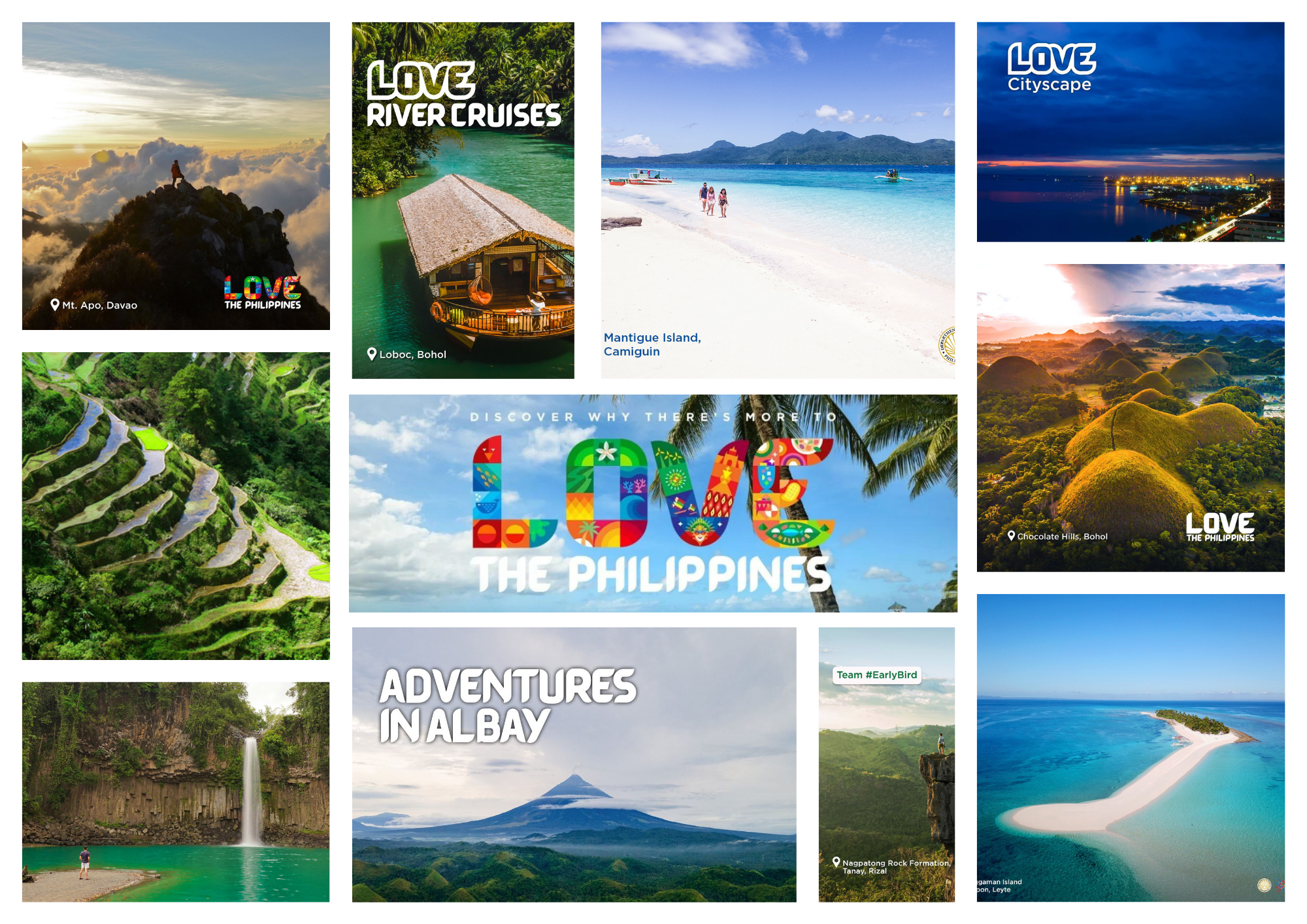
Clark has been steadily positioning itself as a major convention and tourism hub, supported by infrastructure developments, international airport expansion, and the presence of world-class hotels and integrated resorts.
A global gathering of 6,000 young leaders presents an opportunity to showcase the region’s capacity to host international events while highlighting the country’s cultural hospitality and tourism offerings.
For the Philippines, the Congress reinforces the country’s presence in the global meetings, incentives, conferences, and exhibitions industry, often referred to as the MICE sector, which has become an increasingly important driver of tourism revenue worldwide.
Pride First, Opportunity Next
For Pres. LA and the team behind the World Congress, the original motivation remains clear.
The opportunity to bring the global JCI community back to the Philippines was, first and foremost, a matter of pride.
Yet as preparations move forward and the scale of the event becomes clearer, it is evident that the Congress may also become something more.
It may become a week when global leadership, Filipino hospitality, and economic opportunity converge in Clark, creating ripple effects that extend far beyond the convention halls.
SEO by SEO-Hacker. Optimized and maintained by Sigil
© 2026 Asian Pearl. JCI Manila Official Publication. All Rights Reserved.