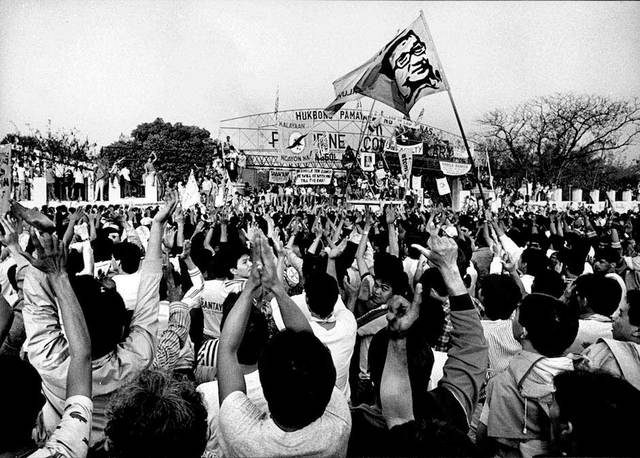
In February 1986, millions of Filipinos gathered along EDSA and reshaped the nation’s political future. While the images of prayerful crowds and civilian courage defined the moment, democratic transition required more than symbolism. It required organized civic action.
Within that landscape, JCI Philippines and JCI Manila were not passive observers. They were engaged through structured initiatives that reinforced institutional stability and democratic participation.
The Projects That Mattered
During the critical 1985 to 1987 period, the Jaycees advanced concrete programs that directly intersected with national transition:
Project Charter
A nationwide campaign to educate citizens on constitutional reforms and democratic principles following political restructuring. The focus was civic literacy and informed participation.
Project OIC
An initiative aligned with governance transition efforts, supporting institutional continuity during administrative restructuring.
Jaycees War Against Poverty
A grassroots development program that redirected civic energy toward community empowerment, ensuring that political reform translated into social impact.
JC for Domestic Tourism
An economic confidence initiative encouraging local participation and national recovery through domestic enterprise.
Election Monitoring and Quick Counts
Jaycee members participated in civic efforts aligned with NAMFREL during the 1986 snap elections and the 1987 congressional elections. These efforts strengthened transparency and public trust in the electoral process.
Leadership at the Helm
The organization’s ability to respond constructively during this period was not incidental. In 1985, under National President Renato B. Batoon, JCI Philippines strengthened its membership systems and leadership development frameworks. This emphasis on institutional discipline enhanced cohesion across chapters nationwide.
By the time national events intensified, the Jaycees functioned as a structured civic institution with coordinated leadership across the country.
In 1987, under Rodolfo C. Fariñas, constitutional education campaigns and election monitoring efforts continued during the first post-EDSA congressional elections. The focus shifted toward democratic literacy and institutional continuity, reinforcing the foundations of the restored republic.
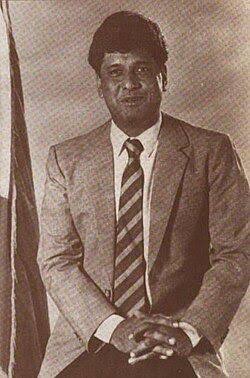
Within this broader national movement, JCI Manila served as a vital urban node of leadership. Prior to the revolution, the chapter was led by Ramon S. Bagatsing Jr., who later became National President of JCI Philippines in 1984.
His tenure as JCI Manila President placed him at the forefront of a chapter composed of young professionals and business leaders active in Metro Manila’s civic landscape. Under his leadership, the organization strengthened its engagement in governance-oriented initiatives, volunteer mobilization, and public accountability efforts.
Bagatsing Jr. was also involved in civic circles aligned with NAMFREL. During the 1986 snap elections, citizen monitoring and quick count mechanisms became central to protecting the credibility of the electoral process. Participation in these initiatives underscored the Jaycees’ commitment to transparency and institutional integrity.
Non-Partisan, Yet Engaged
JCI Manila remained non-partisan throughout this period. It did not endorse political candidates or align with party machinery. However, it was not apolitical.
By advancing constitutional education, governance support, poverty alleviation, and election monitoring, the Jaycees engaged directly in the civic dimensions of democratic transition. Their focus was institutional integrity, public literacy, and organized citizen participation.
In a time when the nation demanded both courage and continuity, the Jaycees contributed through structure, discipline, and civic leadership.
The legacy of EDSA was not sustained by protest alone. It was reinforced by projects that translated public momentum into durable systems.
SEO by SEO-Hacker. Optimized and maintained by Sigil
© 2026 Asian Pearl. JCI Manila Official Publication. All Rights Reserved.